
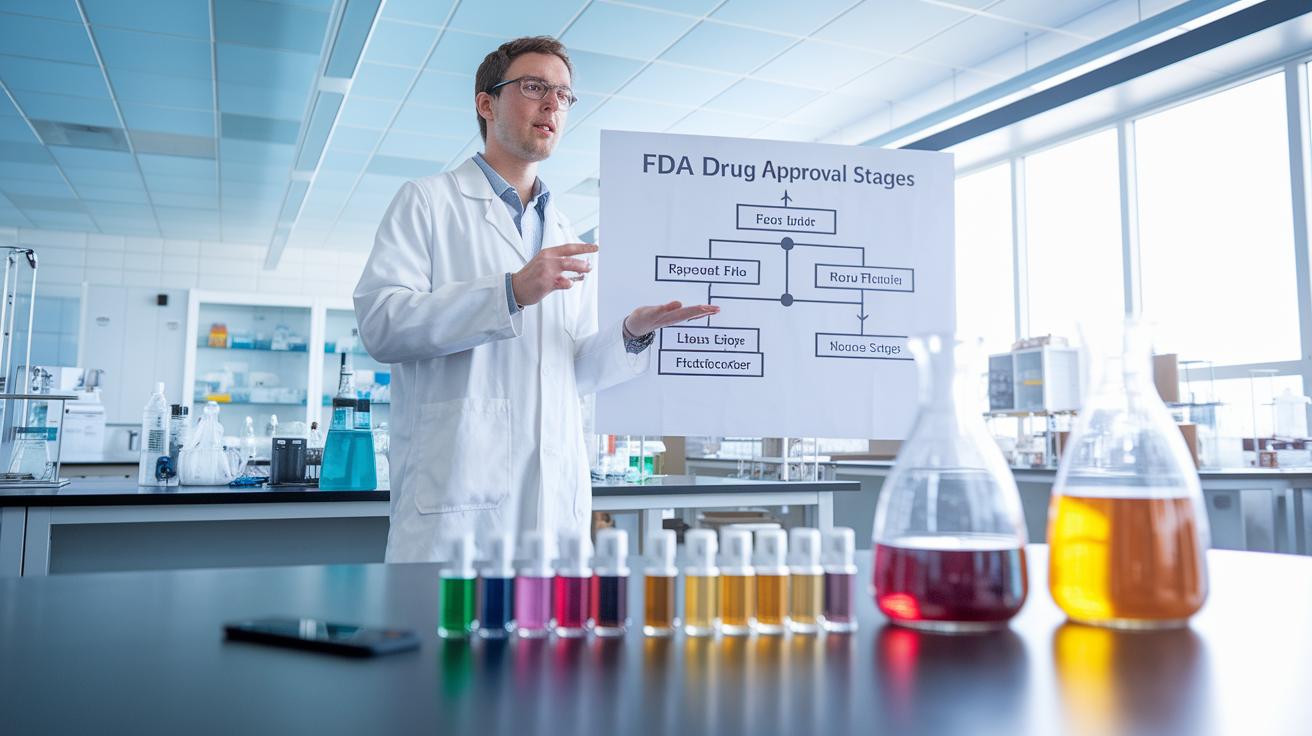

Only a few drug compounds make it to market, just 1 or 2 out of every 10,000. This is because the FDA approval process is long and expensive, taking 10 to 15 years and costing over $1 billion in research.
The journey starts in the lab, where scientists test a new compound and then move on to animal studies. If a drug shows promise, it enters human trials to check safety and effectiveness. Each step is designed to catch any risks, helping to ensure that every approved medicine works as it should and keeps you safe.
Bottom line: It might seem like a huge hurdle, but this careful process is what protects you when you need to use a medicine.
FDA drug approval process explained: Clear and Concise
Drug approval by the FDA takes 10 to 15 years and can cost over $1 billion to bring one drug to market. Thousands of compounds are examined, but only one or two succeed after all the steps. Early on, researchers run lab tests (in vitro) and animal studies (in vivo) to see if a compound works and is safe enough. For instance, in early tests, only a few promising drugs emerge from around 10,000 potential compounds.
If the lab and animal studies show good results, the company submits an Investigational New Drug (IND) application. This document includes data from early tests and asks the FDA for permission to begin testing the drug in people. The purpose is to ensure that the first human trials are safe.
Human testing happens in three stages. In Phase 1, 20 to 100 healthy volunteers check for safety and help determine the right dosage. Phase 2 then studies 100 to 300 patients to see if the drug seems to work and to collect more safety details. Finally, Phase 3 involves 300 to over 3,000 patients to confirm the drug’s benefits and uncover any side effects. Early trial data might show that about 3 out of every 100 patients experience minor side effects, giving clues about safety.
After these trials, the company compiles all the data into a New Drug Application (NDA), which may span thousands of pages. The FDA then reviews everything to ensure the drug meets strict safety, effectiveness, and quality standards.
Even after approval, the FDA keeps watching the drug in Phase 4 post-marketing surveillance. This ongoing check helps spot rare side effects and confirms that the drug works well in the broader community.
FDA Preclinical Study Foundations and IND Submission

Laboratory studies using tests in cells and animals help determine if a new drug is safe and works well. Researchers examine a compound’s activity and toxic effects in different species. For example, a report might read, "No organ damage was seen in animal tests across 3 species," which shows strong early results.
The research team gathers this data into an IND application. This document includes laboratory findings, animal toxicology results, and safety benchmarks. It also explains the plan and protocols for future tests in people, showing how the preclinical work justifies starting human trials.
The IND application is the formal request to let the drug move from lab and animal studies to testing in humans. The FDA reviews all the preclinical data in detail to make sure safety standards are met before any human testing begins.
Clinical Trial Phase Breakdown in the FDA Approval Process
The FDA approval process typically takes 6 to 7 years and includes three main trial phases to ensure drugs are safe and effective.
In Phase 1, a small group of 20 to 100 healthy volunteers takes the drug. Researchers focus on safety, checking the right dose and how the body processes the medication. One trial, for instance, found that among 50 participants, only a few felt mild discomfort at higher doses. These early observations help shape the testing in later phases.
Phase 2 involves 100 to 300 patients who have the condition the drug is meant to treat. This stage looks at early signs that the drug works while continuing to check its safety. Trials are registered publicly to boost transparency. For example, a study noted that about 15 out of 150 patients experienced moderate improvements, suggesting potential benefits.
Phase 3 expands the study to 300 to 3,000 or more patients. This phase is the final, in-depth test of effectiveness and safety. It helps identify any rare side effects and ensures the drug works well across different groups before it goes to the FDA for final review.
New Drug Application and FDA Review Stage

A New Drug Application is a large file that can exceed 1,000 pages. It contains all the lab tests and clinical trial results gathered during the drug’s development. The dossier covers study findings, safety information, manufacturing details, and labeling data. For instance, one report noted that the application includes more than 1,000 pages of data from lab work and clinical studies.
The FDA follows a set review timeline when processing these submissions. A standard review takes about 10 months, while a priority review is completed in 6 months. This faster process helps get promising therapies to patients sooner when there is an urgent need. The FDA also uses a checklist to confirm that every requirement, from quality controls to manufacturing standards, is met.
During the review, the agency checks that the drug meets quality marks, that manufacturing practices follow strict guidelines, and that the labeling clearly explains both risks and benefits. The evaluation includes:
| Step | Detail |
|---|---|
| Data Quality | Verification of study data |
| Manufacturing Review | Inspection of process controls and standards |
| Labeling Check | Ensuring accuracy and clarity in risk and benefit information |
This thorough check helps decide whether more information is needed or if the drug can be approved, all while prioritizing safety and effectiveness.
Post-Authorization Commitments and Pharmacovigilance
Even after a drug is approved, the FDA keeps a close eye on how safe and effective it remains. In Phase 4 studies, researchers gather information over time to catch any rare side effects that might not have shown up in earlier tests. Drug makers must regularly send safety reports and updates on how the drug's benefits compare to its risks. For example, one report noted that after 18 months of use, side effects remained low among 10,000 patients.
The FDA also checks that drug labels reflect the latest safety information. When needed, it uses Risk Evaluation and Mitigation Strategies (REMS) to set clear guidelines on how to prescribe, dispense, or monitor a drug. This helps ensure that both healthcare providers and patients receive the most current safety advice.
Manufacturers follow strict safety protocols, and their regular reports allow the FDA to step in if any issues arise. This ongoing oversight is key to maintaining public trust in a drug’s safety throughout its life.
In a simple way, post-approval monitoring is like the routine service a car gets after purchase, it keeps everything running safely and smoothly.
Expedited Authorization Steps and Special Designations

The FDA has several ways to speed up reviews for treatments meant for serious conditions. These options include Fast Track, Breakthrough Therapy, Priority Review, and Accelerated Approval.
Fast Track lets companies submit parts of their application as soon as they are ready, which helps speed up the process. For example, one company shared, "With Fast Track, we were able to get early feedback from the FDA that shaped our clinical strategy."
Breakthrough Therapy is meant for drugs that show a clear improvement over current treatments. This pathway gives companies more guidance and a quicker review process. For instance, early trial results sometimes point to better survival rates, leading the FDA to grant Breakthrough Therapy status.
Priority Review reduces the review time from 10 months to 6 months. It is designed for drugs that may significantly improve safety or how well treatments work. One company noted that Priority Review cut wait times by nearly half, giving patients faster access to the drug.
Accelerated Approval relies on surrogate endpoints, measurable signs like tumor shrinkage or changes in blood markers, to predict clinical benefits. This pathway allows drugs to be available sooner, although confirmatory trials are needed later to ensure long-term safety and effectiveness.
Key Points:
- Fast Track lets companies submit applications in parts.
- Breakthrough Therapy offers additional guidance and faster reviews for promising drugs.
- Priority Review significantly shortens the review period.
- Accelerated Approval uses surrogate measures to make treatments available sooner.
Each of these options requires strong initial evidence and comes with trade-offs, such as the need for follow-up studies to confirm safety and effectiveness. This approach helps balance the goal of quick patient access with rigorous safety checks.
Compliance Standard Benchmarks, Inspections, and Labeling in FDA Drug Approval
The FDA uses one combined review system. It checks manufacturing controls, inspects facilities, audits clinical practices, and reviews labels when looking at a new drug application. This method helps make sure drugs are made correctly and that the labels clearly explain both risks and benefits.
During facility inspections and clinical practice audits, inspectors ensure that every batch of the drug is produced in the same way with very low impurity levels. They go through production records, maintenance logs, and training notes to confirm that each step meets FDA standards. One report compared these checks to a pilot making sure all instruments work before takeoff.
Drug labels share important risk details in plain language for doctors and patients. They list possible side effects and proper dosages, much like clear safety instructions on household appliances.
Key integrated measures include:
- Regular inspections that ensure manufacturing stays consistent.
- Audits that verify the reliability of clinical study data.
- Label reviews that clearly communicate the risks and benefits.
Final Words
In the action, we broke down the FDA drug approval process explained from start to finish. The post outlined key steps, from lab studies and IND submissions to clinical trials, NDA review, and post-market surveillance. We also touched on expedited pathways and strict compliance measures. This overview simplifies how drugs earn approval while keeping patient safety the top priority. It’s encouraging to see these safeguards in place, giving confidence that each new medicine has passed a rigorous journey before reaching the market.
FAQ
Q: FDA drug approval process PDF
A: The FDA drug approval process PDF contains detailed information on each step, from lab testing to clinical trials and final review, helping stakeholders understand the timeline and requirements for a drug’s market entry.
Q: FDA drug approval process timeline
A: The FDA drug approval process timeline spans 10–15 years and covers stages such as preclinical testing, clinical trials, NDA review, and post-market monitoring to ensure drug safety and efficacy.
Q: What are the 4 phases of FDA approval
A: The 4 phases of FDA approval include preclinical research, the clinical trial stages (Phase 1 through Phase 3), NDA review, and post-marketing surveillance, each critical for assessing a drug’s safety and effectiveness.
Q: Drug development and approval Process
A: The drug development and approval process begins with laboratory and animal studies, then advances through human clinical trials and ends with a comprehensive FDA review to confirm safety and therapeutic value.
Q: FDA new drug approval process
A: The FDA new drug approval process involves the submission of a New Drug Application (NDA) that compiles all safety, efficacy, and manufacturing data, followed by a thorough review over 6 to 10 months.
Q: What are the 4 stages of drug development
A: The 4 stages of drug development are discovery and preclinical studies, human clinical trials, regulatory review, and post-market monitoring, each stage building on previous evidence to ensure drug safety.
Q: FDA approval list
A: The FDA approval list is a public registry that details drugs approved after meeting rigorous safety and efficacy standards, offering transparency on treatments available in the U.S. market.
Q: FDA Approval Application
A: The FDA Approval Application refers to the comprehensive New Drug Application (NDA) that includes extensive preclinical and clinical data, supporting a drug’s market authorization after rigorous review.