
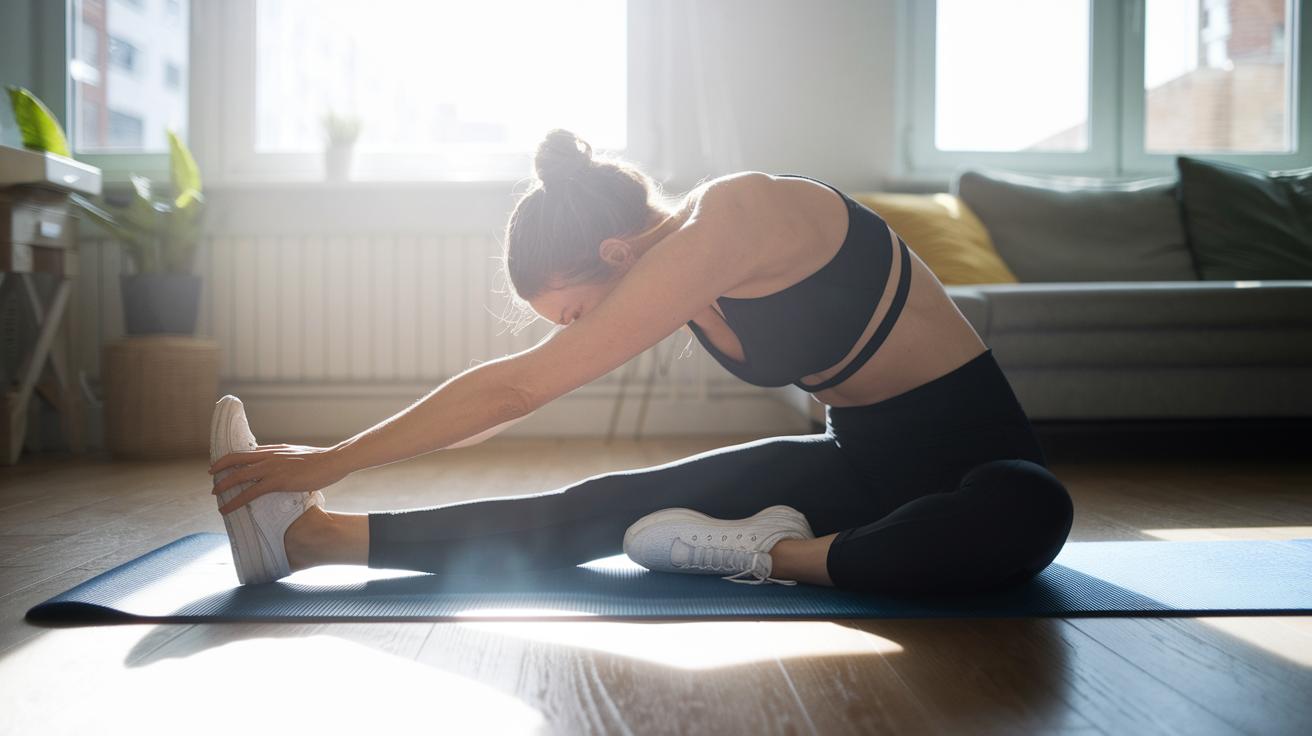

Ever wonder why a short workout can change your day? Even a quick burst of exercise at home can give you an energy boost, lift your mood, and help build healthy habits over time.
This guide offers simple exercises that fit into nearly any schedule. With clear, step-by-step plans designed for all levels, you can gradually build strength and confidence with regular practice.
By putting in a little effort each day, you might notice a big change in both how you feel and how you live. Ready to boost your energy and start a healthier routine?
Getting Started with Simple Exercise Routines for Beginners
Starting a simple exercise routine at home can be a great way to boost your health without the need for a gym or expensive equipment. A 20-minute bodyweight workout fits easily into your day whether you're new to fitness or returning after a break. Begin with a 5-minute warm-up to loosen your muscles, follow with the main workout, and finish with a 5-minute cool-down to help your body recover.
Aim for two to four sessions each week and try to leave about 48 hours between workouts. This schedule helps your body adjust gradually, builds confidence, and sets up a long-term healthy habit. Over a period of 4 to 6 weeks, you can slowly increase how long or how intense your workouts become.
Here are some options to consider:
- 20-minute full-body circuit to improve strength and balance.
- 25-minute routine combining core exercises with light cardio.
- 20-minute at-home drill focused on mobility and flexibility.
- 30-minute session aimed at boosting endurance and overall fitness.
As you grow more comfortable with these workouts, you can safely challenge your body by adding more rounds or extending the duration of the exercises.
Structured Weekly and 5-Week Beginner Training Plans

This guide offers two workout tracks for beginners, allowing you to choose a plan that fits your fitness goals. One path focuses on weight loss, starting with one full-body resistance workout and two easy-paced cardio sessions. The other path, designed for muscle growth, begins with two resistance workouts and one cardio session over the first two weeks. Both plans slowly build up over five weeks to help improve your performance and boost your confidence.
| Week | Resistance Sessions | Cardio Sessions | Rest Days |
|---|---|---|---|
| Week 1 | 1 | 2 | 4 |
| Week 2 | 1 | 2 | 4 |
| Week 3 | 2 | 2 | 3 |
| Week 4 | 2 | 2 | 3 |
| Week 5 | 2 | 2 | 3 |
When choosing your plan, think about your main fitness goal and how your body recovers after workouts. If your aim is to lose weight, the weight-loss track, with its blend of low-impact cardio and resistance exercises, can help boost your calorie burn while building strength. If you're focused on building muscle, the muscle-growth track begins with two resistance sessions and one cardio workout so you can adjust before moving on to more targeted split routines, enhanced with interval walks and extra cardio days.
Both plans recommend doing 2-3 sets of 12-15 repetitions for each exercise with a 30-second rest between sets. Feel free to adjust your rest days to match your recovery needs as you progress over the five weeks.
Bodyweight Conditioning Circuits for Beginners
This 20-minute circuit is made for beginners who want to improve strength and endurance at home without any equipment. The workout is split into three rounds, each with four exercises, so you keep your heart rate up and work several muscle groups at once. It’s a simple and effective routine that helps you build a steady exercise habit.
The circuit features push-ups, squats, doorway rows, and jumping jacks. These basic moves build upper-body strength with push-ups, develop lower-body power with squats, and add heart-pumping cardio with jumping jacks. If a move feels too hard, try modifications like wall push-ups, knee push-ups, or assisted squats. For rows and planks, you can switch to one-arm rows, knee planks, or side planks to match your fitness level while keeping good form.
As you get stronger, add a few extra reps or even an extra round. Try doing this workout 2–4 times a week, and be sure to rest at least 48 hours between sessions so your muscles can recover. With each workout, slowly increasing the speed or number of repetitions will help you overcome early challenges and build your stamina.
Incorporating Dumbbells and Bands into Beginner Routines

When starting with light equipment training, it’s important to focus on proper form and safety. For dumbbell exercises, choose weights between 8 and 20 pounds that feel comfortable. Keep your posture straight and move slowly to lower your chance of injury and get the most out of each exercise. Whether you’re doing squats or overhead presses, good form is key. Take a 30-second break between your 2 to 3 sets of 12 to 15 repetitions so your muscles can recover.
Adding resistance bands to your routine is an affordable way to work both your upper and lower body. Try a band row to strengthen your back or a band deadlift to work the hamstrings and glutes. You can also combine band resistance with bodyweight exercises like squats to gently increase the challenge and boost muscle engagement.
Strength building takes time. Gradually raise the weight, resistance level, or number of repetitions each week when you notice your current routine feels easier. This steady, step-by-step approach helps keep your workouts effective while building lasting muscle strength.
Warm-Up and Cool-Down Essentials for Newcomers
Starting your workout with a dynamic warm-up gets your body ready for action. It raises your heart rate and wakes up your muscles with simple moves like leg swings, arm circles, and walking lunges. These actions help loosen your joints and boost your body temperature, cutting down the chance of injury. Aim for about 5 minutes of steady movement before you begin your main exercise.
After you finish exercising, a cool-down is just as important for recovery and keeping your muscles flexible. Spend around 5 minutes doing gentle stretches to slowly lower your heart rate. For example, hold a standing quad stretch, calf stretch, or a mild forward bend for 30 to 45 seconds each. These stretches help your muscles relax and reduce stiffness, making it easier to settle back into rest.
By pairing a dynamic warm-up with a cool-down, you create a solid exercise routine that boosts performance and protects your muscles. Both parts of the routine lower your injury risk and help your body recover better. Stick with these practices to build healthy habits, enhance your flexibility, and keep your energy up.
Safety Guidelines and Modifications in Beginner Exercise Routines

Starting a new exercise routine calls for a slow and steady approach. Begin with light workouts and short sessions so your body can adjust safely. Focus on doing each move with proper form to avoid injuries. Gradually add about 5 minutes more to your workout each week, and always include rest days to help your muscles recover. If you feel ongoing pain or discomfort, it might be time to change your routine or get advice from a fitness professional.
For those new to exercise, it helps to adjust your moves to match your current fitness level. Try using lower-impact exercises and making changes to how far or how hard you work out. Combining your workouts with a balanced diet supports your progress and keeps you safe. If you’re unsure about your form or how to move forward, a coach or trainer can offer guidance. Listen to your body and respect your personal limits as you build strength and confidence.
Final Words
In the action, this article shows easy ways to start working out at home. We covered simple no-equipment circuits, structured weekly plans, and safe warm-up and cool-down tips. Each section offers clear steps that help you build strength and avoid injury.
Following these exercise routines for beginners can help you make steady progress. Enjoy the practical advice, start at your own pace, and feel confident as you build a healthier lifestyle.
FAQ
What workout routines are available for beginners at home?
Workout routines for beginners at home feature simple bodyweight circuits that start with dynamic warm-ups, include full-body exercises, and end with cool-downs to build strength and endurance safely.
What is a good workout schedule for beginners?
A good workout schedule for beginners involves 2–4 sessions per week with at least 48 hours of rest between sessions, allowing gradual strength gains while minimizing injury risks.
What exercise routines and plans are effective for beginner females, both at home and in the gym?
Effective routines for beginner females combine full-body workouts, low-impact cardio, and strength exercises. They can be adapted for home or gym settings, emphasizing gradual progression and proper rest.
What gym workout plan should beginners, especially males, consider?
A gym workout plan for beginners often includes structured resistance training with a balanced mix of full-body exercises, warm-ups, and cool-downs, designed to steadily increase intensity over time.
What does the 5-3-1 rule mean in strength training?
The 5-3-1 rule describes a method where you perform sets of 5, 3, and 1 repetition(s) to gradually build strength through incremental increases in weight and controlled progress.
What is the 5 4 3 2 1 routine?
The 5 4 3 2 1 routine is an exercise sequence that follows decreasing repetition counts, which helps in building endurance and strength by steadily reducing the reps in each set.
What is the 4/30/10 method workout?
The 4/30/10 method workout involves a specific pattern of activity with 4 phases that include a 30-second high-intensity effort followed by a 10-second recovery, aiding in efficient cardiovascular improvement.