


Have you ever wondered why some people push through their workouts and see real progress, while others struggle to improve? Building upper body strength doesn't need a crowded gym or heavy weights. It all starts with a mix of simple push and pull exercises done two to three times a week.
This guide breaks down the steps you can take to boost your everyday strength and improve your form. Whether you're just starting out or looking to fine-tune your routine, these easy tips can help you build a stronger upper body that works for you.
Proven Steps to Build Upper Body Strength
When you’re building upper body strength, start with a simple plan. Train your upper body two to three times a week. This approach gives your muscles time to recover while you keep making progress.
A balanced workout mixes push and pull exercises. Push-ups work your chest, shoulders, and triceps, while rows target your back. Start with bodyweight moves and medium dumbbells (5–25 lb) to match your fitness level and gradually boost your challenge.
Here are some easy steps to follow:
- Consistency: Choose two to three nonconsecutive days to work your upper body.
- Balanced routine: Do push-ups and rows to work both the front and back muscles.
- Progressive weights: Begin with dumbbells ranging from 5 to 25 lb. If you finish your sets with good form, slowly increase the weight.
- Focus on form: Keep your core tight and use smooth, controlled movements.
- Monitor progress: Write down your sets, repetitions, and weights to track your improvement.
If you’re new to strength training, start simple and adjust as you gain confidence. For example, begin with standard push-ups and then try variations like incline or feet-elevated push-ups when you’re ready for an extra challenge. This gradual approach helps you build strength safely. As you become more experienced, you might even explore techniques like rep drops to further test your muscles.
For more ideas on building a strong foundation, check out this guide on exercise routines for beginners: exercise routines for beginners.
Essential Bodyweight Moves for Upper Body Strength

These exercises help you build strength in your arms, chest, shoulders, core, and glutes without needing any equipment. You can do them anywhere by focusing on good form and gradually increasing the challenge by doing more repetitions, slowing the pace, or changing your hand or arm positions.
- Alternating punches: This move works your shoulders, chest, and triceps while adding a burst of cardio.
- Lateral arm raises: Lift your arms sideways to strengthen your shoulder muscles and boost stability.
- Shoulder press: Push upward using your body weight to target your upper chest, shoulders, and triceps.
- Press-up variations: Adjust your hand placement, whether standard, wide, or close, to shift the focus among your chest, triceps, and core.
- Floor triceps dips: Lower and lift your body using your arms to build strength in the triceps, chest, and shoulders.
- Inchworms: Start standing, then walk your hands forward into a plank position to engage both your core and upper body.
- Plank raises: Hold a strong plank while lifting one arm at a time to work your shoulders, triceps, and glutes.
As you improve, try adding more repetitions or changing the speed of the movement to keep challenging yourself. For more ideas on how to build upper body strength without equipment, check out exercise routines to build muscle.
Mastering Push-Up and Pull-Up Techniques for Strength
Push-ups are a reliable way to build your upper body strength. Start by placing your hands directly under your shoulders, keeping your core tight. As you lower yourself, let your elbows angle out at 45°. If a full push-up feels too hard at first, try doing them on your knees. This helps you build strength gradually while still working your muscles.
Pull-ups are another key exercise. Use a grip that is a little wider than your shoulders. Focus on pulling your shoulders down and back as you lift, and lower yourself slowly so you work all the target muscles.
You can always adjust these exercises to match your current ability. Beginners might try band-assisted pull-ups or push-ups on their knees. As you gain strength, you can challenge yourself with push-ups that elevate your feet or pull-ups with added weight. This step-by-step approach helps you keep proper form and reduce the risk of injury while you build strength.
Integrating Dumbbells and Resistance Bands for Upper Body Power

Dumbbells and resistance bands are a great way to build strength in your upper body. They work on several muscles at once when you follow a good plan.
Start with dumbbells. Do bicep curls with your palms facing out. Use weights between 5 and 25 pounds that feel right for you. For example, you might choose 15-pound dumbbells and do 12 slow, controlled curls. Next, do the Arnold Press to work your shoulders; turn your wrists as you lift. Then try a narrow-grip bent-over row to strengthen your back. Keep a slight bend in your knees and a straight back as you row. Skull crushers will target your triceps, while the overhead press builds strength in your shoulders and upper chest.
Now, switch to resistance bands for some variety. Secure a long-loop band under your feet or around a sturdy railing. For a banded row, stand on the middle of the band, pull the handles toward your body, and squeeze your shoulder blades. For a banded chest press, push the band forward as if doing a standing push-up, feeling even resistance as you extend your arms. You can also do a banded overhead press similar to the dumbbell version. Add a banded triceps kickback and a banded biceps curl to focus on your arms.
Remember to increase the band tension only after you complete all your repetitions with good form. This way, you can gradually build strength and power in your upper body. Always focus on your technique and add more resistance only when each rep feels steady and free of fatigue.
Crafting Your Weekly Upper Body Training Regimen for Muscle Gain
Plan your workouts by choosing 2 or 3 days each week for upper body training, making sure these days are not back-to-back. This way, your muscles get enough time to rest and grow stronger. A simple plan is to dedicate one day to pushing exercises, another to pulling moves, and a third day for stability work.
On push days, try exercises like push-ups, dumbbell presses, or chest presses with a band. These moves work your chest, shoulders, and triceps. For pull days, consider doing bodyweight rows, dumbbell rows, or banded rows to target your back and biceps. The third day can include stability exercises such as planks, floor dips, or resistance band routines that slightly challenge both strength and balance.
If you’re short on time, a quick 10-minute strength routine fits well into your schedule. Also, remember to take breaks for rest and mobility work on your off days or between sessions. This practice helps prevent overtraining and lowers the risk of injury.
Consider these tips for a balanced home workout:
- Exercise 2–3 times weekly on nonconsecutive days.
- Mix bodyweight, dumbbell, and band-based exercises.
- Rotate between push, pull, and stabilization sessions for steady progress.
Ensuring Upper Body Training Safety, Recovery, and Progress Tracking
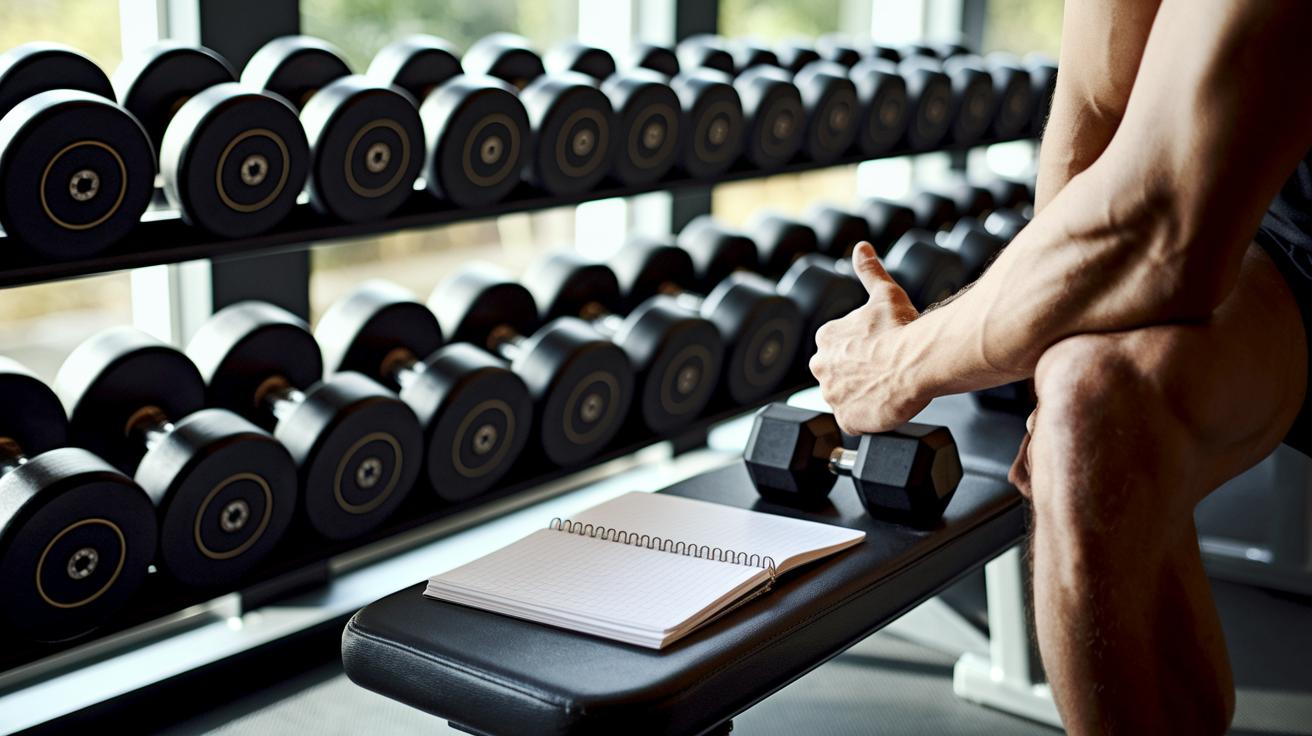
Take a break between strength training workouts to let your muscles fully recover and get stronger. Aim to leave at least 48 hours between sessions. This pause prevents overtraining and lowers your risk of injury. Always use proper form for every repetition. For example, if you start with 15 lb or 20 lb dumbbells, increase the weight only after you complete your sets with good form and little fatigue.
Keeping a simple exercise log helps you see how you’re progressing safely. Write down the number of sets, repetitions, and the weight or resistance you use each time you work out. Looking at this record lets you spot small improvements and decide when it’s time to increase the challenge.
By following these rest and progress strategies, you can build upper body strength gradually and safely. Focus on clean, controlled movements and proper technique, and over time, small increases in weight or resistance will lead to noticeable gains in muscle strength.
Final Words
In the action, the post laid out clear steps for building upper body strength by mixing bodyweight, dumbbell, and resistance band exercises. It touched on proper push-up and pull-up form, created balanced training regimes, and stressed the importance of recovery and tracking progress. Following these steps gives you a roadmap on how to build upper body strength effectively while keeping safety in mind. Keep moving forward confidently, each session brings you closer to a stronger, healthier you.
FAQ
How to build upper body strength at home?
Building upper body strength at home involves mixing bodyweight exercises like push-ups, planks, and inverted rows. Train two to three times a week and gradually increase reps or resistance to see steady progress.
How to gain upper body strength as a woman?
Gaining upper body strength as a woman means using progressive exercises such as modified push-ups and rows. Start with easier variations and gradually add resistance, always focusing on proper form.
How to build upper body strength to do pull-ups and push-ups?
Enhancing strength for pull-ups and push-ups involves working on proper technique and using gradual progressions. Start with assisted versions, like band-assisted pull-ups or knee push-ups, then slowly advance difficulty.
How to build upper body strength with weights?
Using weights like dumbbells can boost upper body power. Focus on exercises like bicep curls, shoulder presses, and bent-over rows while increasing resistance gradually to build muscle effectively.
What is the fastest way to gain upper body strength?
The fastest gains come from a structured routine combining bodyweight and weighted exercises with proper form and steady progression. Consistency and gradual overload help accelerate strength development.
What is the 3-3-3 rule for working out?
The 3-3-3 rule involves a workout format where you perform three exercises, three sets each, in quick succession. This method keeps your workouts intense while allowing for manageable intervals.
What causes weak upper body strength?
Weak upper body strength can stem from inconsistent training, poor exercise form, or not progressively challenging your muscles. Imbalances and inadequate recovery may also contribute to slower strength gains.
What is the 5-3-1 rule?
The 5-3-1 rule is a strength training method that uses decreasing rep ranges across sets to boost muscle gain gradually. It emphasizes steady progression and appropriate load management over time.