


Think you need a gym to get stronger? Think again. You can boost your whole-body strength right at home using simple items like a yoga mat, dumbbells, or even everyday objects.
This plan shows you how to work your major muscles, including your legs, arms, and core, with moves such as squats, push-ups, and lunges. All of these exercises can be done without pricey equipment.
Ready to challenge yourself, build muscle, and feel powerful without leaving your living room? Give it a try.
Efficient At Home Strength Training Workout Plan for Full-Body Gains
Home workouts let you build strength without needing a gym. You can easily exercise in your living room, garage, or spare room using a yoga mat and simple items like dumbbells or household objects. This plan targets your glutes, quads, hamstrings, chest, arms, and core with moves that work several muscle groups at once.
You don’t need expensive equipment to start. Basic exercises such as squats, lunges, push-ups, and planks form the core of your routine. Use your body weight for resistance, or add items like light dumbbells or resistance bands when you have them.
Here’s a sample workout routine:
- Squats – Do 3 sets of 12 reps. Keep your back straight and push through your heels.
- Push-ups – Do 3 sets of 10 reps. Maintain a straight line from your head to your toes and lower slowly.
- Lunges – Do 3 sets of 12 reps per leg. Step forward and make sure your front knee stays behind your toes.
- Glute bridges – Do 3 sets of 15 reps. Squeeze your glutes at the top of each rep.
- Chest press (floor version) – Do 3 sets of 10 reps. Press evenly and focus on control.
- Planks – Hold 3 sets for 30 seconds each. Engage your core and keep your hips from sagging.
Aim for 2-4 workout sessions each week, and give yourself at least 48 hours of rest between sessions so your muscles recover properly. As you get stronger over 4-6 weeks, gradually increase the weight or the number of reps. This gradual increase will help you make steady progress while keeping injuries at bay.
Equipment and Space Setup for Your At Home Strength Training Workout

You can begin a strength workout with very little gear. Try exercises that use your body weight or simple tools like resistance bands, dumbbells (5–20 lbs), or even household items such as cloth bags and canned goods. This easy routine lets you work out without needing a gym.
Create a safe spot in your home by clearing about 6–8 ft of floor space in a room like your living room, garage, or spare bedroom. Lay down a yoga mat for extra cushion during floor work and check that the surface is non-slip and gets good airflow. A sturdy chair or bench can be used for presses and step-ups, while adding kettlebells or extra bands can help mix things up.
Arrange your equipment so you have enough room to move freely. Make sure everything is secure so you can perform exercises like lunges and deadlifts with confidence, reducing the risk of injury. For more tips, see the exercise routines for beginners at https://greatnewssource.com?p=1363.
Key Exercises for Your At Home Strength Training Workout
Below you'll find seven essential exercises that help build strength using your body weight, dumbbells, or everyday household items. These moves work key muscle groups while encouraging proper form. By keeping your spine neutral, aligning your knees, and moving fully, you can safely increase your strength and stability.
| Exercise | Muscle Group | Equipment Needed | Sets | Reps |
|---|---|---|---|---|
| Squats | Quads, Glutes | Bodyweight or Dumbbells | 3 | 12 |
| Deadlifts | Posterior Chain | Household Items | 3 | 10 |
| Push-ups | Chest, Arms, Core | Bodyweight | 3 | 10 |
| Lunges | Quads, Glutes | Bodyweight | 3 | 12 (each leg) |
| Bicep Curls | Arms | Dumbbells/Free Weights | 3 | 12 |
| Chest Press | Chest, Triceps | Floor or Bench | 3 | 10 |
| Glute Bridges | Glutes, Hamstrings, Core | Yoga Mat | 3 | 15 |
If a move feels too hard, try a modified version. For example, you can start with knee push-ups instead of full push-ups to build your strength. As you grow more confident, add a bit more resistance or extra sets to make the workout tougher. You can also slow down each move or extend your range of motion to boost muscle engagement. Keeping a log of your reps and weights can help you track your progress and plan future workouts.
Structuring a Weekly At Home Strength Training Workout Schedule
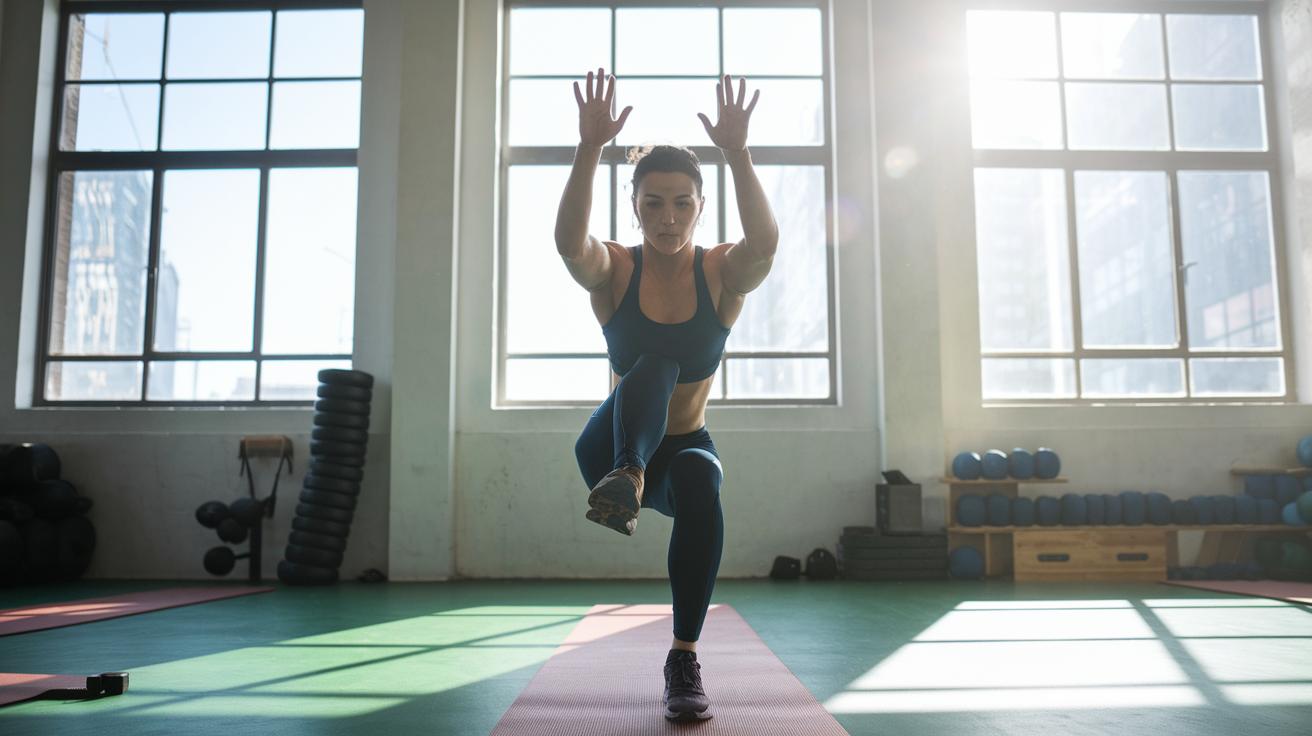
Try to work out 3 to 4 times a week, but give your muscles a break by not exercising on consecutive days. Resting for at least 48 hours between sessions helps your body recover and can lower your chance of injury.
Each workout should last around 45 to 60 minutes. Start with a warm-up of 5 to 10 minutes. Simple moves like arm swings, leg lifts, or light jumping jacks can raise your heart rate nicely. Then, do a circuit that mixes pressing, squatting, and pulling exercises. If you like a challenge, add short bursts of high-intensity interval training (HIIT) to boost endurance and speed up fat loss. End with a cool-down of 5 to 10 minutes using static stretches or a slow walk to help your body settle.
Stick with this plan for 4 to 6 weeks and keep track of your progress by recording your reps, weights, or exercise duration. When the routine starts feeling easier, gradually increase the difficulty by adding more weight or another exercise to your circuit.
Progressing Your At Home Strength Training Workout
Tracking your workouts is key to gradually boosting your strength. Start by writing down your sets, reps, and weights, even with bodyweight exercises. This record not only shows where you began but also helps you know when it's time to add more challenge. As you get stronger, slowly bring in dumbbells, bands, or even household items. The idea is to push your muscles almost to failure in your final set so you keep making gains.
Mixing up your exercises keeps things fresh and effective. For example, switch your push-up routine to incline or decline versions to shift resistance and better work your chest and arms. Try pistol squats or split squats to improve leg strength and balance. For an extra challenge, slow down your squat movements to increase muscle tension, or add explosive jump squats for power. If you're ready for advanced moves, consider supersets, drop sets, or partner drills. Take it slow with each step to avoid injury, and update your workout log often to track your progress and guide your next move.
Safety, Form, and Recovery in Your At Home Strength Training Workout
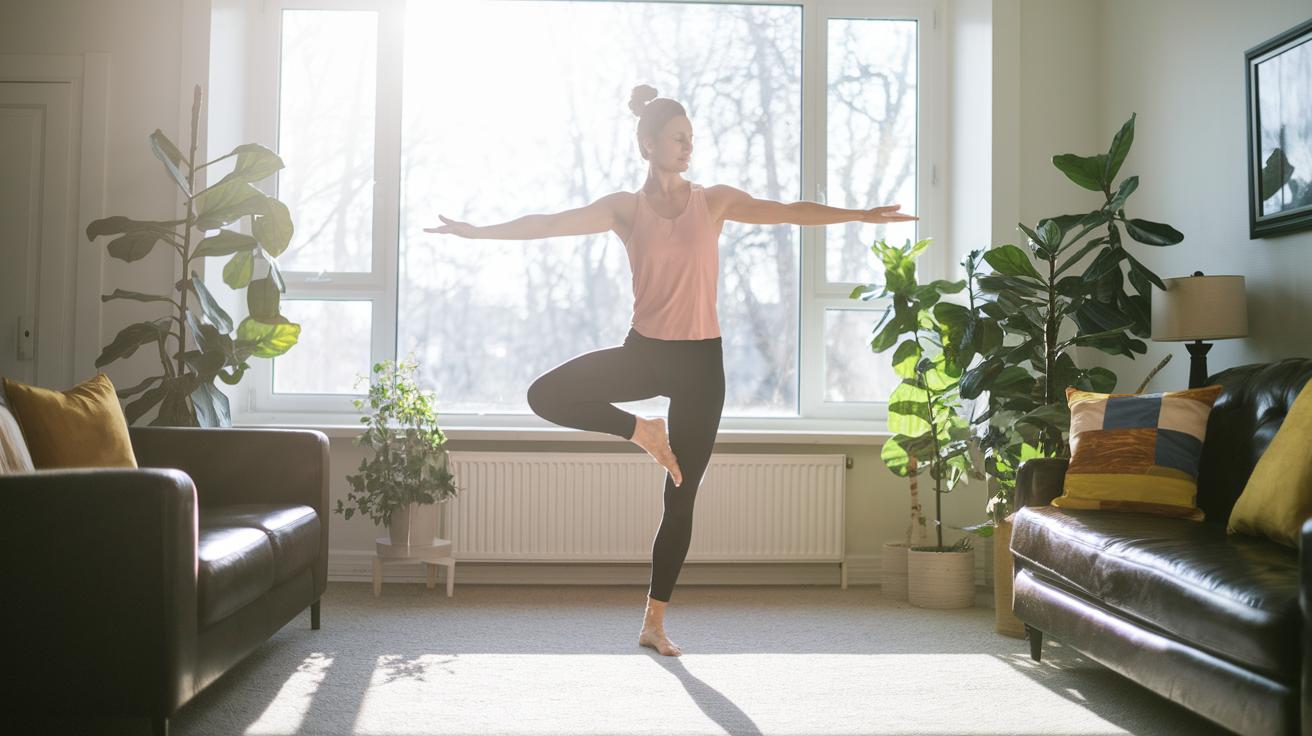
Start your workout with a 5- to 10-minute warm-up. Do simple movements like arm circles, leg swings, or shoulder rolls to get your muscles ready. Focus on keeping your back straight, tightening your stomach, and moving slowly. For example, during squats, keep your knees in line with your toes and be careful if you are using household items for resistance.
After your workout, spend a few minutes cooling down with static stretches. Hold each stretch for 20 to 30 seconds to help your muscles relax. Foam rolling can also ease tension, and quick recovery drills can support muscle repair. Try to rest for 48 to 72 hours between sessions. This rest period helps lessen muscle soreness and lowers your chance of injury, setting you up for steady progress.
Always pay attention to what your body is telling you. If you feel ongoing tightness or pain, give yourself extra rest or change your workout routine. Remember, progress happens when you safely challenge your muscles and allow them time to recover fully.
Final Words
In the action, this article mapped out how to build strength without leaving home using little to no equipment. It outlined setting up a safe space, selecting core exercises like squats and push-ups, and arranging a weekly schedule with proper warm-ups and recovery. Clear tips on tracking progress and adapting exercises were shared to help you stay on track. This at home strength training workout plan offers a practical way to improve muscle tone and overall well-being. Keep moving forward and enjoy your strengthening journey.
FAQ
What does strength training at home without equipment mean?
Strength training at home without equipment means you use your body weight for exercises like squats, push-ups, and lunges. These moves build muscle strength without needing any special gear.
What does the best at home strength training workout entail?
The best at home strength training workout combines key moves—squats, push-ups, lunges—into a circuit. This balanced routine targets multiple muscle groups and fits various skill levels.
What does an at home strength training workout for beginners, including females, look like?
An at home strength training workout for beginners, including females, focuses on simple bodyweight exercises. The routine provides a safe introduction to strength building while targeting major muscle groups.
What does strength training at home equipment involve?
Strength training at home equipment may include resistance bands, light dumbbells, or even household items. Many effective routines rely solely on body weight, making workouts accessible for everyone.
What are 5 resistance exercises in a home workout?
The five resistance exercises typically include squats, push-ups, lunges, planks, and glute bridges. Each targets different muscles and can be done with body weight or minimal equipment for balanced strength.
Can you do effective strength training at home?
Yes, effective strength training at home is possible by using bodyweight exercises or simple equipment. Structured routines with proper form help improve muscle strength and overall fitness without a gym.
What does the 3 3 3 rule for weight lifting mean?
The 3 3 3 rule suggests doing 3 sets of 3 reps across 3 different exercises. This guideline emphasizes quality performance to build strength while keeping the routine simple.
Is strength training good for bone density?
Strength training is good for bone density because resistance exercises stimulate bone remodeling. This process can improve bone strength and help reduce the risk of osteoporosis over time.
What does the 5-3-1 rule refer to?
The 5-3-1 rule is a popular weight lifting program that cycles through sets of 5, 3, and 1 rep. It focuses on gradual load increases to promote steady strength gains over time.