
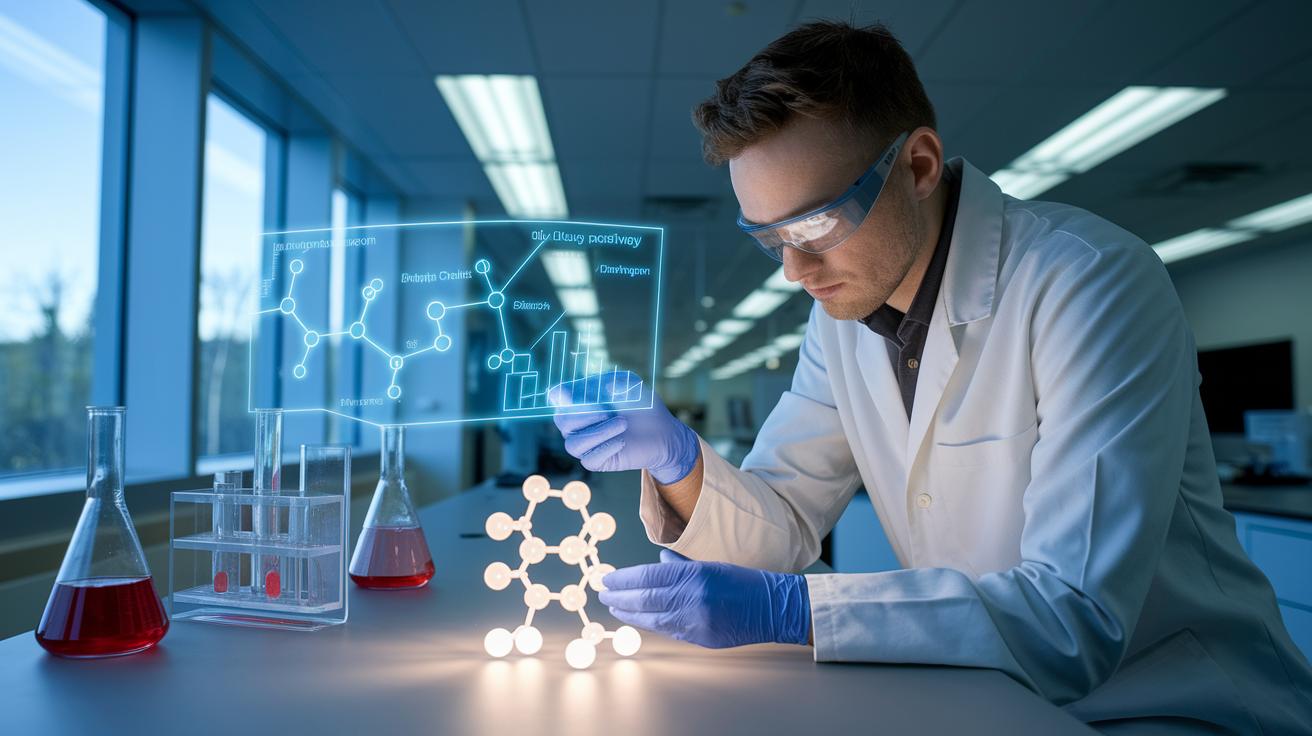

Can AI really change the way we find new drugs? It speeds up early testing by quickly scanning thousands of compounds, which saves researchers time. Yet even small lab test errors can lead to unexpected findings. Some scientists worry that leaning too much on AI may mean experts miss out on critical insights.
In this article we break down what AI does well and where it struggles. We explain how this tool speeds up the search for new drugs and where its limits lie. Keep reading to learn more about how AI is changing drug discovery and why experts still rely on careful analysis.
Capabilities and Boundaries of AI in Drug Discovery
AI is changing the early stages of drug discovery. It speeds up the process of identifying promising targets and improves the way we predict which compounds might work. For example, machine learning helps scientists quickly sort through thousands of molecules to find the best candidates for further study.
The power of AI depends on the quality of the data it uses. Supervised machine learning models need large, high-quality assay datasets to give reliable predictions. However, expensive tests can limit the data available, restricting how well these models can perform. In cases where a high-throughput assay provides plenty of information, simpler screening methods can sometimes be an effective alternative to advanced AI techniques.
Challenges appear when the data is messy or when statistical controls are not strict enough. Small changes in software settings or parameter choices can shift the outcome, so careful data handling is essential to avoid misleading results. Without strict statistical practices, even advanced AI models may not speed up research as expected.
There is also a concern that high expectations and rush to adopt new tools could lower scientific standards and reduce the value of human insight. AI should be used to support experts, not replace them. A balanced approach that combines technology and expert review is necessary to speed up the research process without sacrificing quality.
AI in drug discovery: what it can and cant do shines
Virtual Screening Methodologies
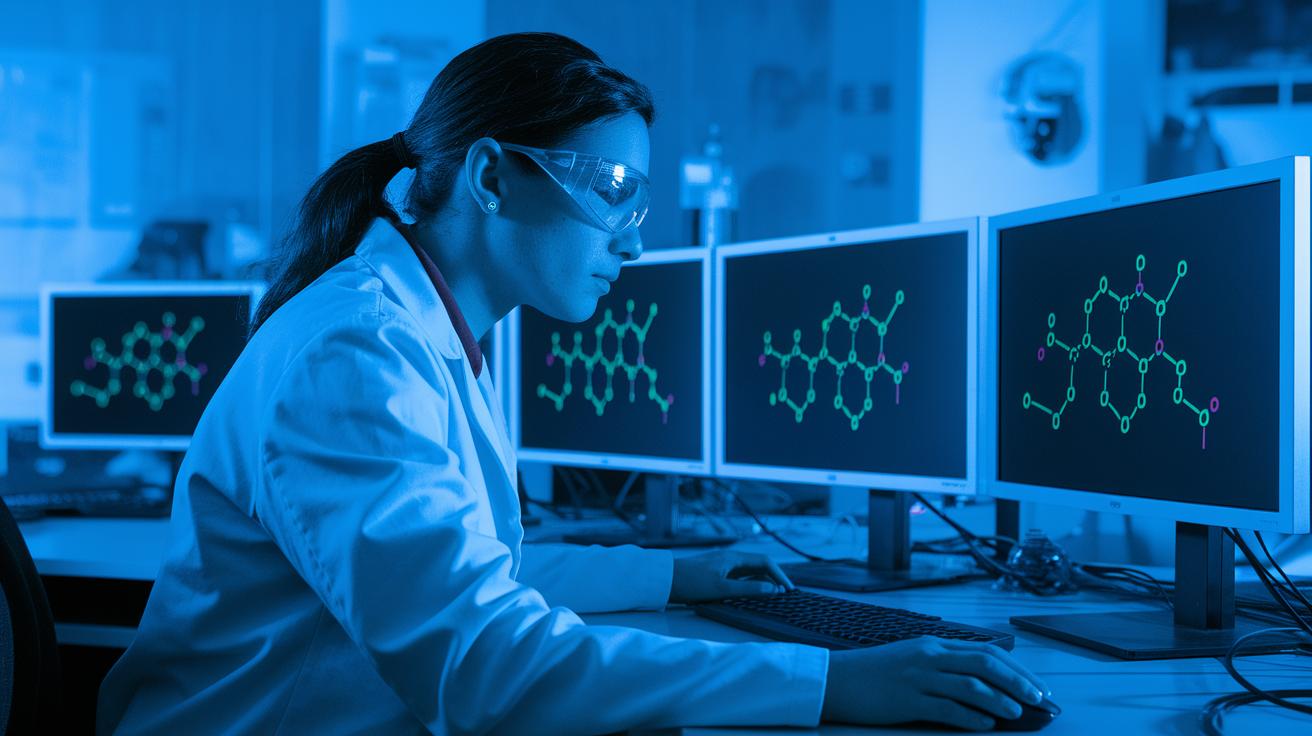
Virtual screening uses computers to look through large libraries of chemical compounds quickly. It works by using docking algorithms to predict how well a molecule might fit into a protein's binding site. After that, scoring functions rank the compounds based on their potential activity. For example, a computer program can scan thousands of molecules and highlight the best candidates. In one study, this method cut down the time to spot promising molecules from months to weeks. While it speeds up selecting early candidates, its success depends on having accurate protein models and a broad, high-quality library.
Deep Neural Networks for Medicinal Design
Deep neural network models provide a new way to create molecules from scratch. These models can generate new chemical structures (called de novo design) while also predicting important properties like solubility or toxicity. They help fine-tune drug leads by analyzing data patterns and suggesting modifications that may boost a drug's performance. For instance, a drug candidate developed entirely by a deep neural network showed similar strength as one made by traditional methods, although it needed thorough verification. These models open new possibilities, but their effectiveness depends on having a large and high-quality set of training data.
Computational Chemistry Applications
Techniques such as QSAR modeling, molecular dynamics simulations, and ADMET property estimation play key roles in computational chemistry. QSAR (Quantitative Structure-Activity Relationship) modeling links a molecule's chemical structure with its biological activity, providing insights into how a compound might behave. Molecular dynamics simulations create a moving picture of how molecules interact in a virtual setting. ADMET predictions help estimate a compound's absorption, distribution, metabolism, excretion, and toxicity early in the development process. For example, a recent simulation found that small changes in a molecule's structure could improve its metabolic stability. Despite their promise, these methods need careful validation before they can reliably predict real-world outcomes.
Comparing AI-Driven and Traditional Drug Discovery Approaches
AI-driven methods use computer simulations, data mining in chemistry, and prediction models in treatments to speed up drug discovery. They analyze large sets of past data to quickly spot promising drug candidates. This means faster decision-making and efficient screening compared to traditional methods, which often depend on long, hands-on lab experiments that can take many months.
Traditional screening has a strong record of reliability but is usually slower and more expensive. Meanwhile, AI methods rely heavily on accurate and clean data. If the data is messy or incomplete, the predictions may not work as well and could lead to lower success rates. Because of these factors, many researchers are starting to combine both methods, using AI to shortlist candidates early on and then confirming them with lab tests. This blend helps balance speed with thorough testing.
| Approach | Average Time to Lead (months) | Screening Cost (USD) | Hit Rate (%) |
|---|---|---|---|
| Traditional Screening | 12 | $5,000,000 | 1.5 |
| AI-Driven Workflow | 8 | $3,000,000 | 2.5 |
| Hybrid Approach | 10 | $4,000,000 | 2.0 |
This comparison shows that AI-driven discovery can lower both time and cost. However, its success depends on the quality of the data and effective integration with traditional lab work.
Limitations and Challenges of AI in Drug Discovery
Our earlier discussion touched on problems like unstable assay data, the assay cost paradox, rushed AI rollouts, and sensitivity to software updates. Below is a quick summary of these hurdles without repeating earlier details.
Detailed Challenges
- Data quality issues: Many assay datasets are incomplete or inconsistent, which can lower confidence in model predictions.
- Assay cost paradox: When assays are expensive, there is less data available. In contrast, cheaper, high-throughput assays may rely on simple approaches that bypass more advanced AI methods.
- Accelerated timelines: Pressure from leadership can force teams into tight deadlines, which might compromise careful scientific work.
- Repetitive model training: Focusing too much on routine training limits time for creative problem-solving in research.
- Unstable historical data: Older databases often come with varying quality, making them less compatible with current algorithms.
- Software sensitivity: Small changes in software versions or settings can significantly change model results if not monitored closely.
- Integration barriers: Working in silos and limited collaboration between different teams makes it harder to improve areas such as predictive safety profiling, computational target validation, and clinical trial simulation algorithms (see clinical trial registry at https://greatnewssource.com?p=1378).
Implementation Barriers for AI Integration in Drug Discovery
Using AI in drug discovery means bringing together many different kinds of data. Lab tests, genetic studies, and lab notebook records all come in various formats and use different words. This mix makes it hard to build one smooth data flow. Extra work is needed to standardize the entries and check for errors, which can delay finding new drug targets and screening compounds.
Another challenge is meeting strict rules and standards. AI software must keep detailed records and follow guidelines that change over time. Every update needs careful checking so that drug safety profiling remains accurate. These careful steps can slow down progress as teams try to mix new technology with regulatory demands.
A further obstacle is the shortage of experts who understand all sides of the process. Successful AI integration needs professionals well-versed in AI, chemistry, and drug regulations. Without proper training and teamwork, companies may stick with old methods until the needed skills are developed.
Future Perspectives for AI in Drug Discovery
Experts say it's important to set realistic goals for using AI in drug discovery. They believe that combining human creativity with smart computer tools can help make better decisions without replacing experienced researchers. Advanced software now helps pick promising drug candidates more quickly while keeping the careful standards of lab work. One team even improved selection by using clear, quality data along with smart screening methods.
Continuous improvements in data quality, clear algorithms, and better transparency are key to moving the field forward. Deep learning techniques and new models for finding therapies are showing real promise in predicting how drugs will behave. Better handling of lab results and more meaningful validation methods give scientists the confidence they need when forecasting a drug's performance. By blending expert knowledge with technological smarts, researchers are opening the door to creative breakthroughs and steady progress.
Looking ahead, building these systems with care and realistic timelines will be essential for reaching new heights while keeping scientific standards high. The ongoing teamwork between seasoned experts and AI tools promises a future where technology acts as a trusted partner in drug discovery, not a replacement.
Final Words
in the action, our article explored how AI speeds up target identification and predictive modeling in drug discovery. It covered virtual screening, deep neural networks, and computational chemistry while also noting challenges like high assay costs and data hurdles.
The piece compared AI-driven tactics with traditional methods, emphasizing that human expertise still holds vital value. AI in drug discovery: what it can and cant do remains a tool with promise, pointing to a future where balanced innovation can foster smarter, more efficient research pathways.
FAQ
What is AI in drug discovery?
The term AI in drug discovery describes using computer algorithms and machine learning to identify targets, screen compounds, and predict outcomes, speeding early research and optimizing molecule design.
What are the benefits of AI in drug discovery?
The benefits of AI in drug discovery include faster target identification, improved compound screening, and streamlined predictive modeling, which can reduce costs and enhance candidate selection.
What are some examples of AI in drug discovery?
Examples of AI in drug discovery include high-throughput virtual screening, molecular docking, deep neural networks for de novo molecule design, and predictive modeling to assess compound properties.
Are there accessible resources like PPTs, PDFs, articles, and courses on AI in drug discovery?
AI in drug discovery resources include PPT presentations, detailed PDFs, informative articles, and structured courses that offer insights into methods, benefits, and challenges within the field.