


Ever thought you might be skipping a key strength boost for your shoulders? Many people leave out rear delt exercises even though these muscles make up one third of your shoulder and help keep your posture straight. Adding simple, targeted moves can make your arms stronger and help with daily tasks, especially if you sit for long periods. This guide explains easy exercises that work your rear delts at home or in the gym. Give your shoulders the care they need.
Targeted Rear Delt Exercises for Strength and Posture
Your rear delts make up about one-third of your shoulder muscles and help you move your arms and keep your shoulders stable. In fact, about one in every three shoulder muscles is a rear delt, even though they often get overlooked.
Experts recommend working these muscles 2 to 3 times a week with 12 to 20 reps per set. Try different angles, seated, bent-over, and standing, to keep your shoulder muscles balanced and reduce the risk of posture issues, especially if you spend a lot of time at a desk.
There are several ways to train your rear delts. Dumbbell moves like the bent-over reverse fly and seated reverse lateral raise let you work the muscle carefully. Machines and cables, such as cable face pulls and reverse pec-deck flys, keep the resistance steady for focused training. Bands make it easy to do pull-aparts at home, and using your body weight with TRX reverse flys adds a practical touch.
Mixing up these exercises helps build balanced shoulder strength. Using different equipment lets you move your muscles through their full range, which is great for overall shoulder health. Stick to regular, high-volume workouts to boost strength and improve your posture for daily activities like lifting or reaching overhead.
Dumbbell-Focused Rear Delt Exercises

Bent-Over Reverse Fly
Stand with a slight bend in your knees and keep your back straight. Hold a pair of dumbbells with a firm grip. Hinge at your hips and let your arms hang down. Slowly lift the weights to your sides, keeping the movement even on both arms. Start slowly and feel your rear shoulders working.
Seated Reverse Lateral Raise
Sit on an incline bench with your chest pressed against it. Let the dumbbells hang down naturally. Then, lift your arms sideways until they are parallel to the floor. Keep your movement smooth and steady, as if you are gently handling something fragile.
Chest-Supported Incline Row
Lie face down on an incline bench and hold a dumbbell in each hand. Pull the weights upward while squeezing your shoulder blades together. This position helps target your upper back muscles and reduces strain on your lower back.
Bent-Over Y Raise
Bend your knees slightly and lean forward. With a dumbbell in each hand, lift your arms upward and outward to form a Y shape. Perform this move slowly, focusing on engaging your rear shoulders from different angles.
| Exercise | Equipment | Sets x Reps |
|---|---|---|
| Bent-Over Reverse Fly | Dumbbells | 3-4 x 12-15 |
| Seated Reverse Lateral Raise | Incline Bench & Dumbbells | 3-4 x 12-15 |
| Chest-Supported Incline Row | Incline Bench & Dumbbells | 3-4 x 12-15 |
| Bent-Over Y Raise | Dumbbells | 3-4 x 12-15 |
Cable and Machine Rear Delt Lifts
Cable and machine exercises help you target your rear shoulder muscles while keeping your shoulder muscles balanced. These exercises work well by keeping your movements strict so that you use your muscles instead of momentum. Try doing 3 to 4 sets of 10 to 12 reps for each exercise, and focus on controlling the weight both as you lift and lower it.
Cable Face Pull
Start by setting your cable machine with a rope attachment at eye level. Stand with your feet apart about the width of your shoulders and hold the rope with your palms facing each other. Keep your elbows lifted as you pull the rope toward your face. As you do this, rotate your shoulders outward and squeeze your shoulder blades together. This exercise works your rear shoulders along with the muscles between your shoulder blades. For example, pull the rope slowly until your hands nearly reach your ears, then bring it back under control.
Machine Reverse Pec-Deck Fly
Sit down on the reverse pec-deck machine and press your chest firmly against the pad. With your arms out straight at shoulder level, push the handles outward slowly. The fixed motion of the machine helps focus the tension on your rear shoulders and reduces strain on your back. Think of it like gently lifting the handles outward while keeping your chest pressed against the pad, then slowly returning to the starting position.
Single-Arm Cable Rear Lift
Attach a single handle to the cable machine and set the pulley so that it’s at shoulder height. Stand with your side facing the machine and grab the handle with one hand. Pull the handle across your body in a controlled motion. This one-sided move helps even out any strength differences between your two sides. Make sure to keep your core tight and complete each lift slowly to take full advantage of the muscle work during the lowering phase.
At-Home and Band-Powered Rear Delt Drills
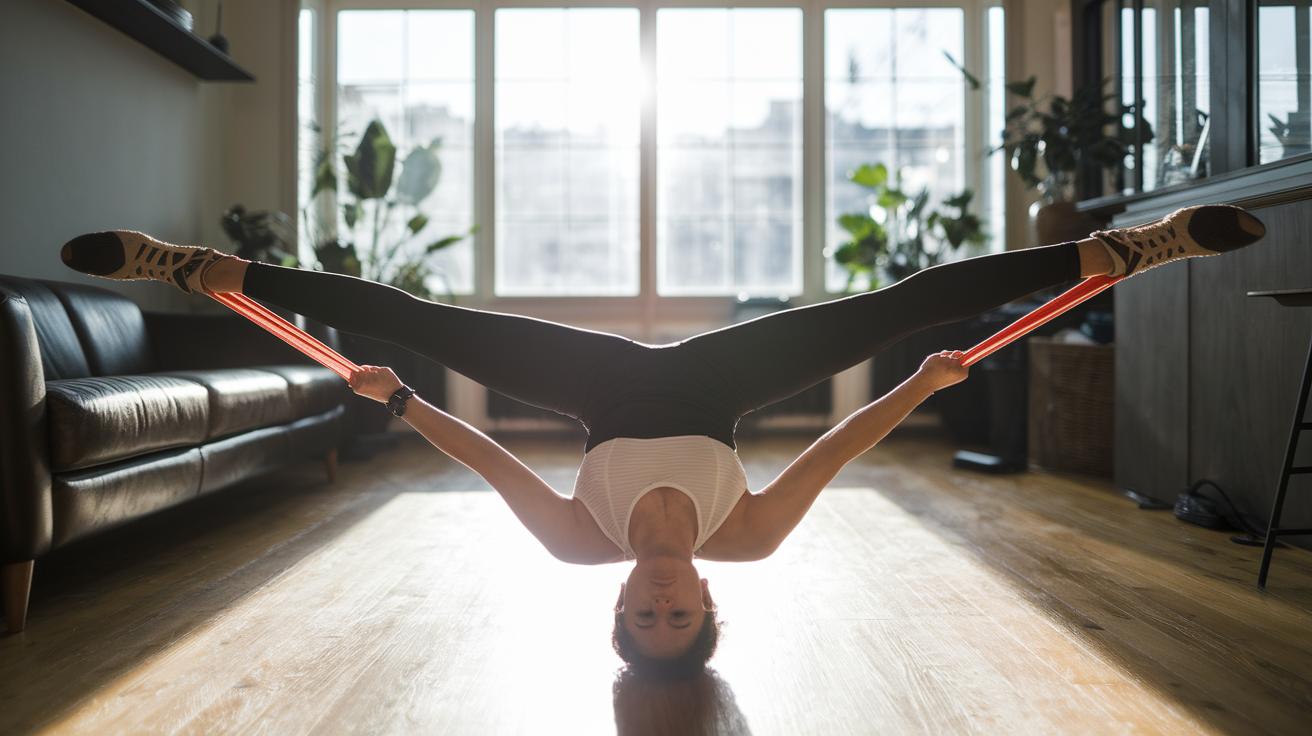
These five exercises let you work your rear shoulder muscles at home without a gym. Do 2–3 sets of 15–20 reps each, and keep your movements slow and controlled to really work the muscles.
-
Resistance band reverse fly: Secure a resistance band at chest height. Stand facing the fixed band with your feet about shoulder-width apart. Hold the handles with straight arms and slowly pull them out to your sides until your arms are fully extended. Keep a slight bend in your elbows and squeeze your rear shoulder muscles as you pull. Step back to add more resistance as you get stronger.
-
Band pull-aparts: Hold a resistance band with both hands in front of you at shoulder level. Gently move your hands outward while keeping your elbows slightly bent. This slow, controlled motion targets the rear delts, traps, and rhomboids. For a greater challenge, grip the band tighter or use one with more thickness.
-
TRX reverse fly: Lean back while holding TRX straps so your body is at an angle. With your arms extended, pull your hands apart in a reverse fly motion. Tighten your core to reduce swinging, and adjust the strap length to increase the difficulty.
-
Inverted Y raise: Use a suspension trainer or sturdy straps to set your body at an incline. Lift your arms overhead in a Y shape, squeezing your upper back as you move. This exercise helps build strength and balance in your shoulder muscles.
-
Bodyweight rear delt T-raise: Lie face down on the floor with your arms out to the sides. Slowly lift your arms to form a T shape. This move builds shoulder endurance and can also help improve your posture.
Programming Your Rear Delt Workouts
A well-rounded rear delt routine uses a mix of exercises. In one session, include a dumbbell movement, a cable or machine exercise, and a band or bodyweight drill. For example, you could perform a dumbbell bent-over reverse fly, a cable face pull, and a resistance band reverse fly. Experts suggest working these muscles 2–3 times per week with sets of 12–20 repetitions to build muscle. Begin each workout with activation moves like band pull-aparts to warm up your muscles and set the stage for controlled movements.
If you're just starting out, try to complete three workouts each week. In every session, focus on:
- Keeping your core tight to stabilize your body and limit swinging.
- Maintaining a neutral spine and slow, controlled movements to fully engage your muscles.
- Allowing 48 hours of rest for your rear delts between workouts so they have time to recover.
For those with more training experience, consider slightly increasing the weight or number of sets. You can also vary your routine by working in different positions, such as seated, bent-over, and standing. This variety not only hits the rear delts from various angles but also helps lead to balanced shoulder development. For additional muscle-building programs, check out these routines for muscle building (https://greatnewssource.com?p=1529) and core workouts (https://greatnewssource.com?p=1565) to support stability and strength during your training.
Common Mistakes and Safety Tips for Rear Delt Training

Using your body's momentum instead of muscle control is a common mistake in rear delt lifts. Many people use weights that are too heavy, which can lead to bad form and a higher chance of injury. Often, trainees do not rotate their shoulders enough during the lift, so the muscles do not fully work. Skipping the full range of motion means you miss out on key muscle engagement and may see slower progress.
When one side carries more load than the other, it can create muscle imbalances and make you feel uncomfortable. Keeping a neutral spine and avoiding shoulder shrugging during each rep is very important. Focus on steady and controlled movements when lifting and lowering the weight. You might also add simple mobility exercises for the back shoulder to boost flexibility and stability. Checking your form with a mirror or asking a training partner for help can correct any bad habits.
Start with lighter weights until you feel confident in your technique. This not only protects your joints but also builds lasting shoulder strength. In every workout, aim for quality over quantity to get the best results and stay safe.
Final Words
In the action, this post outlined how balanced training for your rear delt exercises can support shoulder stability and proper posture. The guide broke down dumbbell drills, cable moves, and at-home options to help you work these muscles effectively. It also stressed proper form, gradual progression, and safety tips to prevent injury. Rethink your workout routine with these strategies to build a strong, well-balanced shoulder structure and enjoy the benefits of thoughtful training.
FAQ
Q: What are effective dumbbell rear delt exercises?
A: The effective dumbbell rear delt exercises include bent-over reverse fly, seated reverse lateral raise, chest-supported incline row, and bent-over Y raise. These moves isolate and build the rear shoulder muscles.
Q: What are good rear delt cable exercises?
A: The effective rear delt cable exercises include cable face pulls and single-arm cable rear lifts. They emphasize controlled movements to target the rear delts and support shoulder stability.
Q: What rear delt exercises can I do at home?
A: Rear delt exercises at home include resistance band reverse flys, band pull-aparts, and bodyweight moves like TRX reverse flys. They effectively train the rear shoulder muscles without gym equipment.
Q: What is the best exercise for rear delts?
A: The best exercise for rear delts is often the bent-over reverse fly, as it directly isolates the posterior shoulder muscles and improves posture with controlled movements.
Q: How do I hit my rear delts effectively?
A: Hitting your rear delts effectively means using a mix of angles and equipment, from dumbbells and cables to bands. Consistent training 2–3 times per week helps build balanced strength.
Q: Are rear delts hard to grow?
A: Rear delts can be challenging because everyday movements favor the front and sides. Focused, varied training with controlled reps and proper form helps promote growth over time.
Q: Is the rear delt part of the back or shoulder?
A: The rear delt is part of the shoulder, specifically the posterior deltoid. It plays a key role in arm rotation and maintaining proper shoulder stability and posture.
Q: How do exercises like face pull and reverse flye contribute to rear delt training?
A: Face pulls and reverse flyes work the posterior shoulder muscles directly, helping to improve muscle balance and shoulder stability through targeted, isolation movements.
Q: What safety tips should I follow during rear delt training?
A: Always maintain proper form, use controlled motions, and avoid heavy weights that can compromise technique. Warming up and mobility drills enhance safety and prevent injury.
Q: What common mistakes should I avoid during rear delt exercises?
A: Avoid common errors like using excessive momentum, neglecting full range of motion, and improper posture. Focusing on controlled concentric and eccentric phases ensures effective and safe training.
| Exercise | Equipment | Sets x Reps |
|---|---|---|
| Bent-Over Reverse Fly | Dumbbells | 3-4 sets x 12-15 reps |
| Seated Reverse Lateral Raise | Dumbbells, Incline Bench | 3-4 sets x 12-15 reps |
| Chest-Supported Incline Row | Dumbbells | 3-4 sets x 12-15 reps |
| Bent-Over Y Raise | Dumbbells | 3-4 sets x 12-15 reps |