
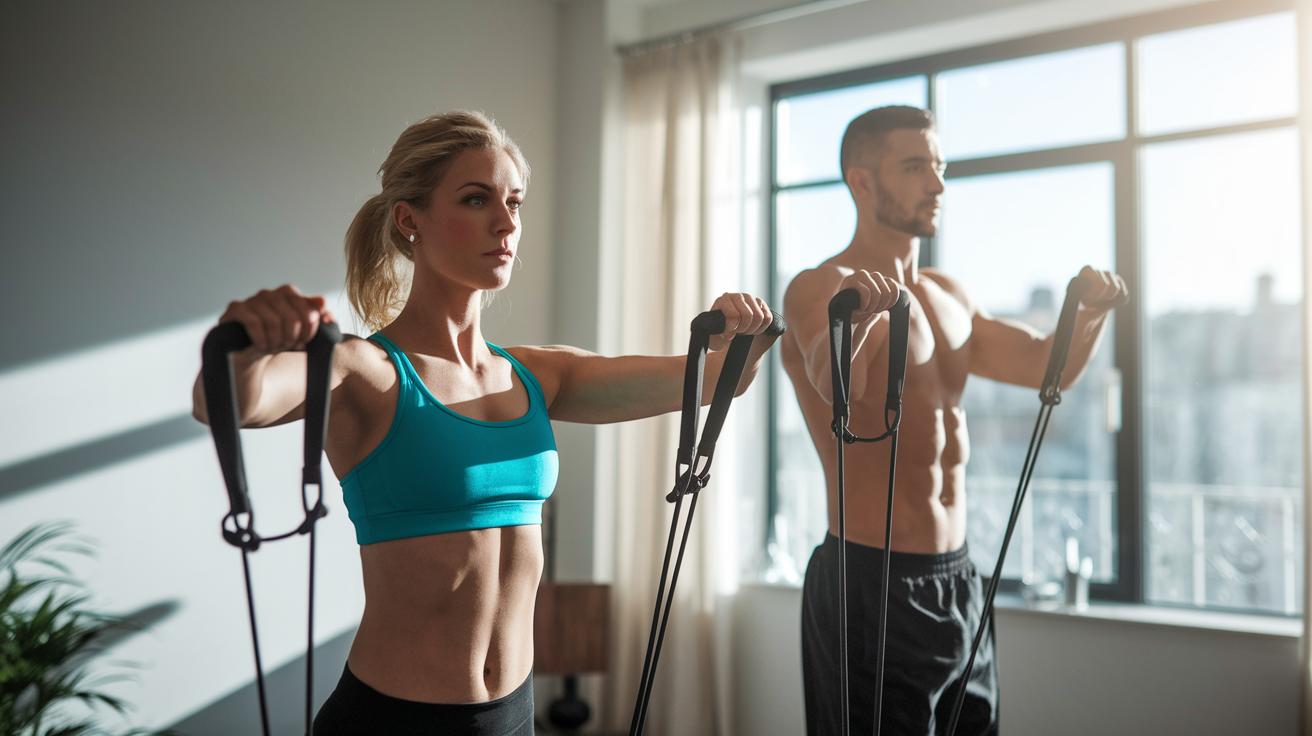

What if a simple stretch band could power your entire workout? Heavy weights have long been the standard for building muscle, but elastic bands offer a fresh alternative. Since 1895, these bands have been used in rehabilitation and are now trusted by fitness experts. They provide a safe and low-cost way to tone muscles and burn fat. Elastic bands help boost strength and balance for both beginners and experienced athletes. Our guide shows you how to use these bands to energize your workout and transform your strength training routine.
Core Principles of Strength Training with Elastic Bands
Stretch bands were first used in 1895 for rehabilitation, and today research shows they build muscle much like traditional weights. These affordable, portable tools let you do full-body workouts at home without heavy equipment.
Elastic bands are safe for everyone. Whether you’re just starting out or getting back into exercise, begin with a lighter band and focus on proper form. You might anchor a long band at chest height using a stable object like a stair railing, or loop it securely under your feet. This beginner-friendly method emphasizes control, lowering the risk of injury while still working your muscles and helping with fat loss.
Their versatility makes them a great fit for various exercises. You can use them to boost upper body strength, enhance core stability, or target lower-body muscles during weight loss routines. Because elastic bands allow movement in different directions, they also help improve your balance and overall functional strength.
Elastic resistance training isn’t only about building muscle. When paired with a structured workout, it becomes a practical tool for weight loss. It’s a simple, effective way to tone up your body, no bulky gym equipment required.
Selecting Elastic Bands and Tubing for Effective Strength Workouts
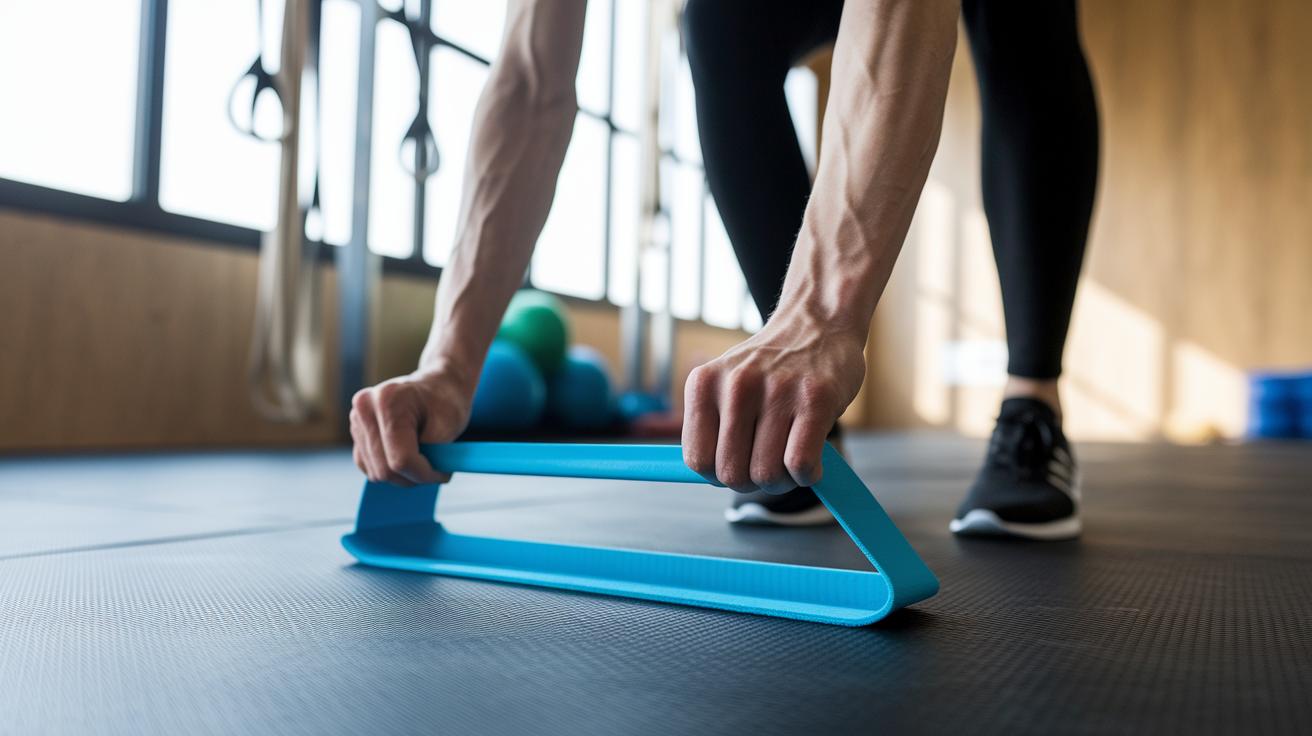
Elastic bands come in three main types, each suited for different training needs. Flat therapy bands (also called sheet bands) provide gentle resistance and let you move through a full range of motion. They work well when you need a slow, easy warm-up to get your muscles ready for tougher work.
Flat loop bands are a great choice for bodyweight exercises. They supply steady resistance that supports moves such as squats and glute workouts throughout the entire exercise.
Tube bands with handles are built for more traditional strength exercises. They let you perform pushing and pulling movements much like using free weights. These bands come in color-coded levels from extra light to extra heavy, and you can even stack them if you want more resistance.
| Band Type | Best For | Key Feature |
|---|---|---|
| Flat Therapy Bands | Rehabilitation and gentle stretches | Low tension, smooth stretch |
| Flat Loop Bands | Lower-body exercises | Steady resistance, ideal for squats |
| Tube Bands with Handles | Upper-body strength moves | Color-coded resistance, stackable |
These durable bands roll up into a compact bundle, making them easy to pack for travel or store at home. They are a practical way to maintain strength training, no matter where you are.
Proper Technique and Safety Protocols for Elastic Band Training
Begin your workout with a solid warm-up. A few minutes of moving around gets your muscles ready and lowers the risk of injury. Always check your band first by holding it up to a light. If you see any nicks, tears, or discoloration, swap it out right away.
Secure your band by anchoring it to a firm, stable object or placing it correctly under your feet. Improper anchoring might lead to a loss of control or even snapping. Also, never stretch your band more than 2.5 times its resting length. Overstretching can wear it out quickly or cause it to break during your set.
Keep quality in focus rather than trying to do too much too soon. Some key safety tips to remember are:
- Start with bands that offer lower resistance until you master the proper form.
- Regularly check your band for any signs of wear.
- Make sure your anchor is secure and avoid stretching the band too far.
After you finish exercising, cool down with gentle stretches. This helps reduce muscle tightness and lowers your chance of injury.
Beginner Elastic Band Workout: 10-Minute Upper-Body Routine
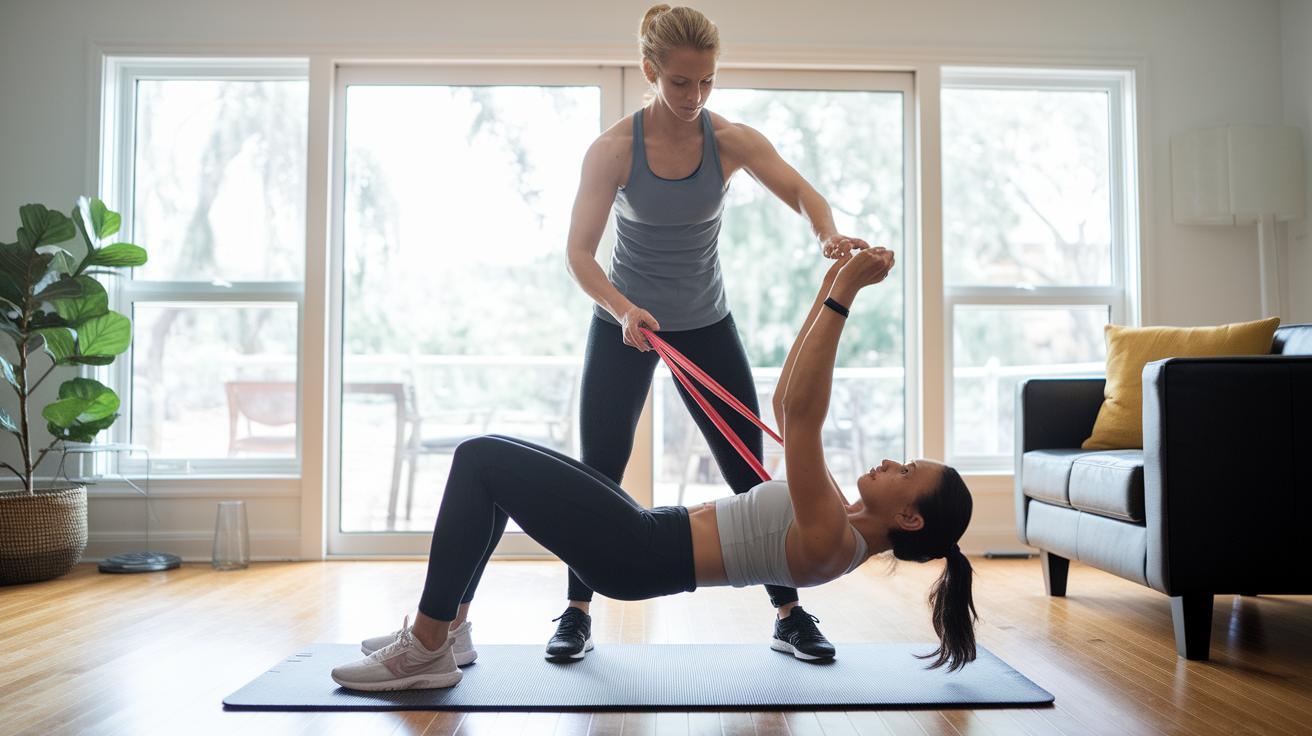
This simple routine uses an elastic band to build upper-body strength. A certified trainer designed it for those just starting out with stretch exercise methods. First, secure a long-loop band at chest height on a sturdy object like a stair railing or place it under your feet, as needed.
Begin with the banded row. Hold the band with both hands and pull it toward your chest, working your back muscles. Do 15 repetitions. Next, try the banded chest press. Turn away from the anchor and push the band forward slowly, focusing on your chest. Perform 15 reps.
Then move into the banded overhead press. Hold the band at shoulder level and push upward slowly until your arms are almost straight, then return to the start. Complete 15 repetitions. After that, do the banded triceps kickback. With one hand supported, extend your arm backward by pushing against the band for 15 reps.
Finish with the banded biceps curl. Stand on the band and curl your hands toward your shoulders, aiming for 15 reps. If you feel ready for more, do 3 sets in total with a 45-second rest between sets. When you can complete 2 full sets of 15 reps without feeling tired, try using a band with higher resistance. Remember: good form is more important than speed.
Fun fact: resistance bands were first used in rehabilitation, which shows how they can help build strength in a safe way.
Lower Body and Core Strengthening with Elastic Bands
Using elastic bands can boost your workout by challenging your leg and core muscles in simple ways. Try squats by looping the band under your feet and holding the ends at shoulder height. This extra pull helps work your thighs and butt as you lower down and stand up.
Next, lie on your back with your knees bent for glute bridges. Place the band just above your knees and lift your hips. You will feel your butt and the back of your legs work harder with the band in place.
For a seated leg press, sit with your legs straight and wrap the band around your soles. Push your feet out to feel your front thigh muscles work, much like a leg press machine in a gym.
Lastly, improve your planks by wrapping the band around your upper back and anchoring it under your hands. This small change forces your abs and lower back to work even more to keep your body steady.
Key tips:
These exercises offer a practical way to work your lower body and core without needing heavy equipment. You can adjust the band if you need more or less resistance, making your workout both flexible and effective.
Strength Training with Elastic Bands: Energize Your Workout
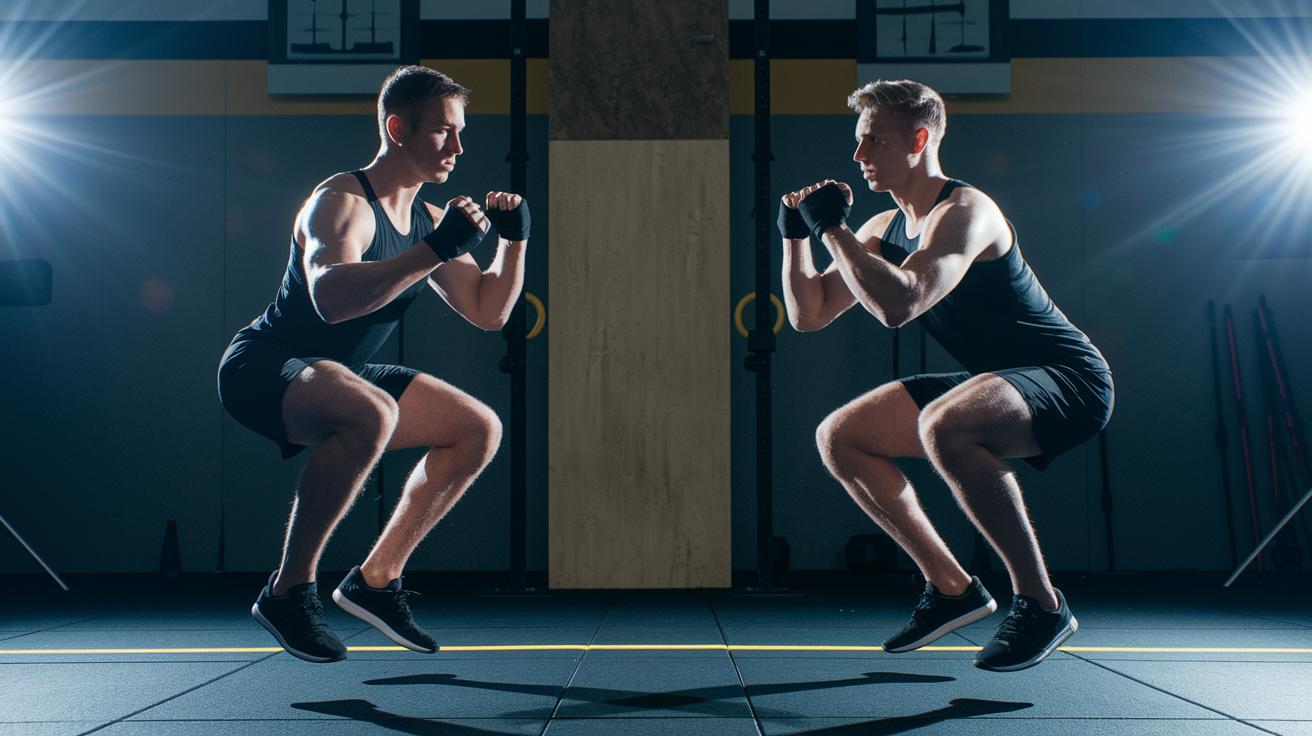
A study from 2019 shows that resistance band exercises offer strength gains similar to traditional weightlifting, no matter your fitness level. This means that if you’re ready to move beyond the beginner stage, adding power-focused band drills can make your workouts even better.
One move to try is the banded squat jump. Place the band under your feet and hold it at shoulder level as you lower into a squat, then jump quickly upward. Another option is the band pull-apart. Stand with your feet shoulder-width apart and pull the band apart rapidly to work your shoulders and upper back. You can also try fast-resistance rows, secure the band to something stable and pull it quickly while focusing on strong, sharp movements.
For a regular routine, start with 3 sets of 12 repetitions using a moderate resistance band. As you grow stronger, switch to 4 sets of 8 repetitions with a higher tension band. This step-by-step progress helps you keep good form while increasing the challenge.
For a heart-pumping session, combine 6 to 8 different band exercises into a circuit with little rest between moves. Rotating through these explosive exercises not only targets different muscle groups but also boosts your heart rate and supports overall conditioning.
12-Week Elastic Resistance Training Plan for Progressive Gains
In weeks 1–4, focus on mastering your form. Workout twice each week with 2 sets of 15 repetitions per exercise using a light resistance band. This early stage is all about learning proper movements and feeling comfortable with the bands. Keep a simple weekly log to record the band color, how many reps you complete, and how challenging each session feels.
From weeks 5–8, increase your workout sessions to 3 per week and shift to 3 sets of 12 repetitions. When you finish the initial routine without feeling too tired, add an extra band or choose one with more resistance. This gradual step-up builds muscle strength while keeping your technique steady. Always allow at least 48 hours between workouts, start with a dynamic warm-up, and end with a cool-down stretch.
During weeks 9–12, make your workouts more intense by doing 4 sets of 8 repetitions and adding brief, controlled explosive movements. Shorter rest periods will help raise your heart rate and push your muscles further. Continue tracking your progress carefully by noting any changes in band colors, recording your reps or sets, and logging your perceived effort after each session.
This plan offers clear milestones that let you adjust gradually as you build strength and confidence with elastic band training. Stick with it, and remember that solid technique always comes before increasing resistance.
Strength Training with Elastic Bands: Energize Your Workout
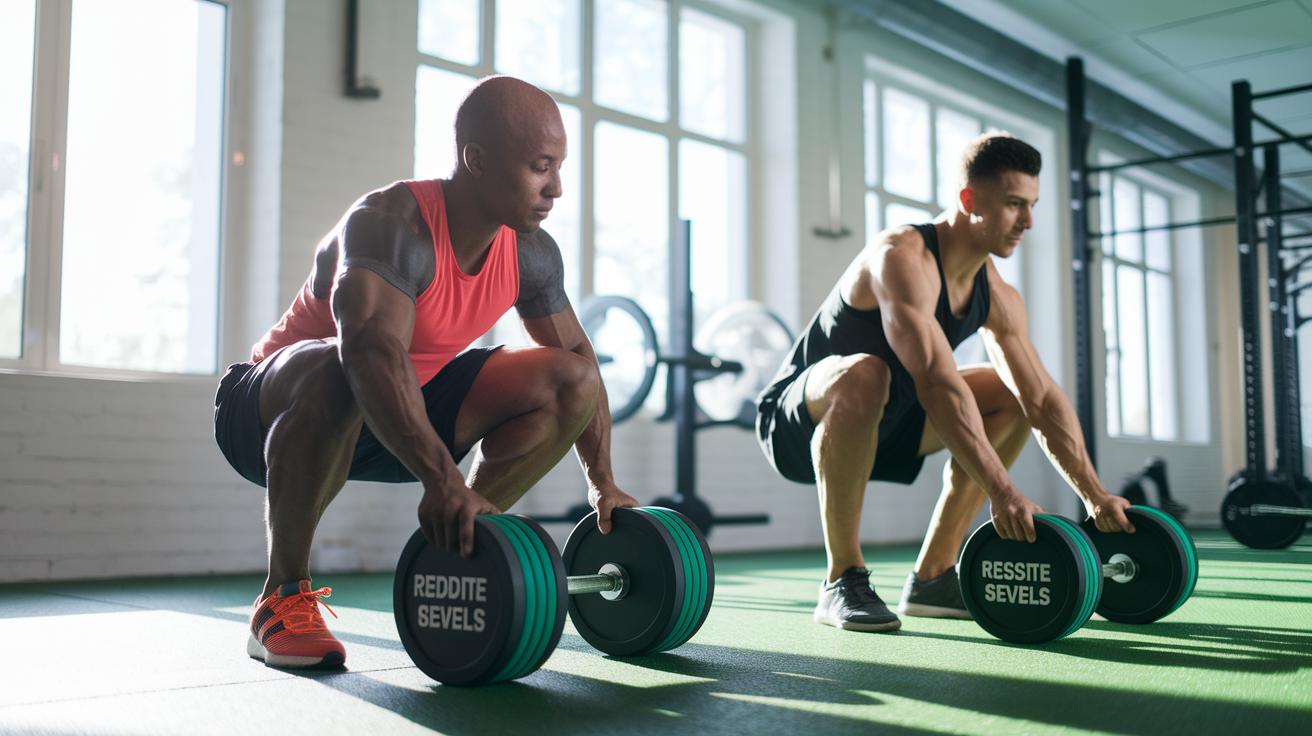
Elastic bands give your muscles a boost by creating varying resistance with every move. Research shows that if you match the workout’s volume and intensity, you can see strength gains with bands that are similar to those from free weights. You can combine band exercises like banded squats and rows with free weights to build both stability and overall strength.
These bands are light, portable, and more affordable than many gym machines. You can easily increase the resistance by choosing a thicker band or using two at once. This gradual increase in load is a safer choice compared to free weights, which often need careful adjustments and can lead to injury if your form slips.
Key benefits include:
- Changing resistance that works muscles throughout the movement
- Portability for workouts at home or outdoors
- Lower cost compared to traditional gym equipment
- Safer, step-by-step load increase
Mixing elastic band training with free weights can give your routine a well-rounded challenge. For example, after finishing a set of banded push-ups, you might follow up with dumbbell presses to build balanced strength.
Caring for and Maintaining Elastic Bands and Tubing
Before every workout, give your elastic bands a quick look. Check them closely for any tears, changes in color, or signs that the material is getting weak. If you spot any damage, throw the band away right away so you stay safe.
After your workout, wash your band with mild soap and water. A good idea is to gently soap it up and then lay it flat to air-dry, much like you would with a favorite workout towel. Make sure it dries completely before you put it away because any remaining moisture can make the rubber break down faster.
Keep your bands away from direct sunlight and extreme temperatures. Storing them in a cool, shaded spot helps protect the material from wearing out too soon.
It’s smart to plan on replacing your bands every 3 to 6 months if you use them regularly, or sooner if they seem less stretchy. You might also consider buying a set that includes several bands with different resistance levels, so you can easily change your workout as you improve.
Key tips:
- Always inspect your bands for tears or discoloration before using them.
- Wash with mild soap and let them air-dry completely.
- Store in a cool, shaded spot.
- Replace every 3–6 months, or sooner if needed.
Final Words
In the action, this article walked through the basics and benefits of strength training with elastic bands. It covered proper techniques, safety checks, and a variety of workouts from beginner to advanced levels. The guide also compared elastic band routines with traditional weightlifting and offered practical maintenance tips to keep your equipment in top shape. Each section builds on the next to help you make the most of portable, flexible resistance training. Stay active, follow safe practices, and enjoy more ways to boost your strength and well-being.
FAQ
Q: How can I access a 12 week resistance band training program PDF?
A: The 12-week resistance band training program PDF provides a structured schedule for progressing in strength workouts with elastic bands, available online for guidance.
Q: How does strength training with elastic bands work for beginners?
A: Strength training with elastic bands is beginner-friendly, using affordable, portable equipment to build strength safely at home while emphasizing proper form.
Q: How can resistance band exercises for beginners be learned with images or PDF guides?
A: Resistance band exercises with picture guides or PDFs offer clear visual instructions that help beginners master form, understand movements, and build confidence.
Q: What are the benefits of strength training with elastic bands?
A: Strength training with elastic bands boosts muscle strength, endurance, and stability while providing variable resistance, portability, and an affordable home workout option.
Q: How do resistance band exercises build muscle?
A: Resistance band exercises build muscle through progressive resistance and variable tension, working similarly to free weights while challenging muscles effectively with proper form.
Q: How do I perform strength training with elastic bands at home?
A: Performing strength training with elastic bands at home is convenient and adaptable, using secure anchors to target both upper and lower body muscles through a variety of exercises.
Q: What does the 3-3-3 rule in the gym refer to?
A: The 3-3-3 rule in gym workouts typically suggests structuring exercises into 3 sets of 3 repetitions or focusing on 3 key exercises; it’s best to consult a trainer to match guidelines with your level.
Q: Are resistance bands good for diabetics?
A: Resistance bands can benefit diabetics by improving muscle strength, circulation, and glucose metabolism, offering a low-impact workout alternative that complements overall diabetes management under doctor supervision.