

The World Health Organization (WHO) plays a big role in keeping our world healthy. Since 1948, it has fought infections and helped stop dangerous diseases by setting clear rules and guidelines. WHO works with 194 countries to watch for old and new health threats, from the battle against smallpox to the challenges of climate change. Every day, it supports research and strengthens local health systems so that nations have the tools they need to protect millions of lives.
WHO’s Mission and Core Roles in Global Health
The World Health Organization was created in 1948 by the United Nations to coordinate public health efforts around the world. As a special UN agency, WHO led the fight against infectious diseases and set the rules for good health practice. In its early days, WHO focused on uniting countries to manage outbreaks and improve health systems. The smallpox eradication mission is one clear example of that teamwork.
Every day, WHO works through five main actions: setting global standards, doing clear research, building partnerships, giving technical help, and watching health trends worldwide. Setting standards means creating science-based rules that guide health work. Research gives us strong evidence to make good decisions. Partnerships let countries share skills and resources, while technical help strengthens local health systems. Watching health trends means spotting new threats early and acting fast, like offering quick support during an outbreak to contain it sooner.
Over the years, WHO has widened its work to tackle new challenges. Today, its efforts go beyond stopping infections to include issues such as climate change, tobacco control, and road safety. This broader focus means the organization adjusts its advice and support based on new research about our environment and lifestyles. With its ongoing focus on preventing risks and guiding nations, WHO continues to be a key player in protecting global public health.
How WHO Is Structured: Regional and Country Offices
Based in Geneva, WHO works to improve public health around the world through a network of regional and country offices. The organization runs six regional offices for Africa, the Americas, Eastern Mediterranean, Europe, South-East Asia, and the Western Pacific. Each region helps shape local health policies, advises governments, and backs health projects. WHO is guided by delegates from 194 member states who vote on policies and choose the Director-General, Tedros Adhanom Ghebreyesus. This open decision-making process helps maintain strong global health oversight.
Regional offices link global health standards to local needs. They support health collaborations by offering advice and carrying out detailed health checks in individual countries. This helps adapt international guidelines to each area. Moreover, these offices work quickly to respond during outbreaks and emergencies. With more than 150 country offices around the world, WHO teams up with local leaders to watch health trends and put coordinated plans into action.
| Region | # Country Offices | Main Functions |
|---|---|---|
| Africa | 40 | Regional surveillance, technical support, policy guidance |
| Americas | 25 | Health assessments, outbreak response, advisory services |
| Eastern Mediterranean | 15 | Coordinating local health initiatives, emergency planning |
| Europe | 35 | Policy monitoring, technical assistance, health strategy support |
| South-East Asia | 15 | Country-level health programs, research, and advisory |
| Western Pacific | 20 | Public health surveillance, technical cooperation, region-specific planning |
Preventing Disease: WHO’s Strategies and Outbreak Response
WHO’s organized vaccination programs have made a huge impact. A prime example is the end of smallpox by 1980, which showed that working together around the world can beat even the deadliest diseases. Today, WHO keeps pushing key immunization efforts to protect communities everywhere.
• Smallpox – Ended by a global vaccination drive that stopped the disease in its tracks.
• Polio – Ongoing efforts aim to drive this debilitating virus toward complete elimination.
• Measles – Active campaigns work to cut down cases and stop outbreaks affecting millions.
• COVID-19 – Coordinated response plans and widespread vaccination slow the virus’s spread.
Countries follow the International Health Regulations (2005) to track and report possible outbreaks. This global system helps WHO spot new threats fast. When sudden illness spikes occur, WHO teams quickly move in to find the cause and help contain the spread.
Building strong global health surveillance is a key part of these efforts. Data collected from many countries shows which areas may be at risk. This information helps WHO guide local health authorities on the best ways to control diseases. Quick detection through these networks leads to targeted vaccination drives that manage current outbreaks and build readiness for future challenges.
Setting Standards: WHO’s Health Guidelines and Protocols
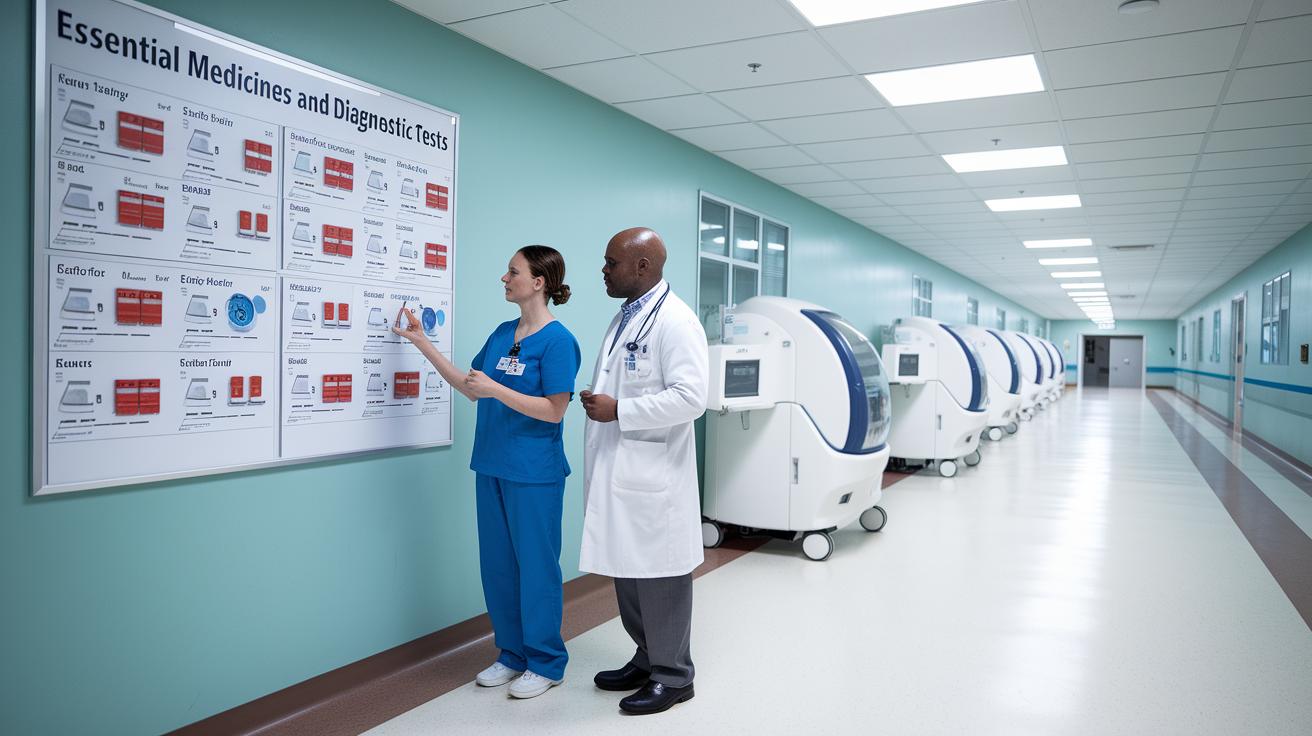
Since 1977, WHO has created key lists to help hospitals and clinics have the right tools. They publish an essential medicines list and a set of recommended diagnostic tests so that care providers can treat patients correctly. WHO also offers simple rules on how to use important devices like ventilators and imaging machines. These guidelines even help busy emergency rooms decide which tools to use when every second counts.
WHO also works on reducing infections in healthcare settings. They provide clear steps and checklists for disinfecting rooms and controlling the spread of germs. These rules not only help hospitals but also shape broader public health policies, such as guidelines on road safety and tobacco use.
Looking beyond hospitals, WHO has broadened its guidelines to cover risks like climate-related health hazards. With these expanded protocols, countries get clear advice when updating policies on issues like pollution. These guidelines make sure that clinical practices and public policies both keep up with new health challenges.
Emergency Health Response and Pandemic Preparedness at WHO
Countries follow the International Health Regulations (IHR, 2005) to watch for and report health problems. This system makes sure that any unusual illness or outbreak is flagged quickly so WHO can assess the threat and coordinate a global response. Think of it as an early warning network that sounds the alarm when something isn’t right.
In January 2020, when COVID-19 appeared, WHO declared it a Public Health Emergency of International Concern. They quickly put together a plan and initially requested $675 million to help protect public health around the world. As the crisis grew, funding increased to $1.5 billion, which allowed WHO to give countries essential supplies and expert advice. This jump in funds shows just how significant the response needed to be.
Some experts have noted delays in reporting and decision-making during the early stages of outbreaks like COVID-19 and Ebola. These delays have raised concerns about how fast WHO can act when time is of the essence. Officials say that the complex reporting and funding rules can slow down the process during fast-moving emergencies.
After the Ebola outbreak, WHO introduced several reforms to improve rapid emergency management. They set up a reserve team of public health workers, created a $100 million emergency fund, and built an incident management system to deploy resources quickly. These steps are meant to fix past problems and ensure that new threats are met with a prompt, well-supported response.
Financing the WHO: Budget, Funding Mechanisms, and Partnerships
The WHO has a budget of about $6.1 billion for 2022–23. A surprising fact is that only around 16% of this money comes from mandatory dues by member states. The rest is raised through voluntary contributions, which keeps the budget flexible and reliable at the same time.
Countries like Germany, the United States, and the United Kingdom, along with private groups such as the Bill & Melinda Gates Foundation, help fund many of WHO's activities. These extra contributions let the organization quickly respond to new health problems and support special projects, on top of its basic funding.
With this mix of funds, the WHO is able to create policy advice, carry out country assessments, and guide reforms in health financing. By building strong partnerships and supporting research, the WHO helps countries develop more durable health systems and better plan for public health challenges around the world.
Monitoring, Research, and Innovation in WHO’s Work
WHO collects health data from many countries to track trends and guide decisions. The organization studies disease patterns, such as seasonal outbreaks, to spot risk factors early. For instance, one research project followed flu trends across regions to predict where an outbreak might happen.
By working with experts around the globe, WHO leads research that tackles both common and unique health challenges. Scientists from various countries pool their data to answer key questions, like what causes a virus to spread quickly. This global teamwork strengthens findings and benefits communities everywhere.
WHO also boosts health innovation by offering technical support and digital health tools. The agency helps update how diseases are diagnosed and treated so that countries can use methods proven to work. By sharing new techniques and best practices, WHO ensures that even small clinics can access modern tools to improve care.
Final Words
In the action, the blog post walked through WHO’s creation, core roles, and expanded efforts in global health governance. It detailed how the organization sets norms, supports disease prevention, and coordinates emergency responses. The overview also touched on WHO’s structure, funding, and research innovations. This explanation answers the question, what does the world health organization (WHO) do, by outlining its key functions and impact. The work of WHO continues to empower countries and shape better health outcomes, inspiring confidence for a healthier future.
FAQ
When was the World Health Organization founded?
The WHO was established in 1948 as a UN agency to lead international public health efforts.
How is the World Health Organization funded?
The funding for the WHO comes from mandatory dues from member states and voluntary contributions from governments and private partners.
What is the World Health Organization and what is its main role?
The WHO is a UN agency that coordinates global health care, sets international standards, provides technical support, and monitors health trends worldwide.
Why is the World Health Organization important?
The WHO is crucial because it guides international health policies, responds to emergencies, and ensures standardized care that saves lives globally.
Where is the World Health Organization headquarters located?
The WHO headquarters is in Geneva, Switzerland, serving as its central hub for global health coordination.
What is the history of the World Health Organization?
The WHO began in 1948 as a UN agency and has grown to tackle emerging issues like climate change, tobacco control, and road safety over the decades.
What functions does the World Health Organization perform?
The WHO’s roles include setting health norms, leading research, forming partnerships, providing technical support, and monitoring global trends, with broader lists describing up to 10 key functions such as policy guidance and emergency management.
What are some examples of the World Health Organization’s work?
The WHO’s work includes eradicating smallpox, running immunization campaigns for polio, measles, COVID-19, developing health guidelines, and coordinating emergency responses.
What are the five core functions of the World Health Organization?
Its five key functions are to set international health norms, conduct research, build partnerships, offer technical support, and monitor global health trends.
Which countries are not part of the World Health Organization?
Most nations participate in the WHO, though some opt out due to political or economic differences, and such details may change over time.